When buyers source door locks from overseas suppliers, one concern appears repeatedly during discussions:
“How can we be sure the products arriving at our warehouse will match the approved samples?”
For distributors, wholesalers, project contractors, and brand owners, quality issues create far more damage than the cost of replacing products. Delayed projects, customer complaints, warranty claims, and damaged reputation can all result from inconsistent quality.
After working with international buyers for many years, we have found that successful door lock projects are rarely determined by price alone. Choosing the right supplier requires evaluating manufacturing capability, quality control systems, and long-term reliability. You can also learn more about what factors buyers should consider when selecting a reliable supplier in our guide: How to Choose a Reliable Door Hardware Supplier in China: Beyond Price.
In this article, we share how professional door lock manufacturers reduce risks and prevent quality problems before products leave the factory.
Quality Starts with Raw Material Inspection
Many door lock issues begin long before assembly.
The quality of zinc alloy, stainless steel, brass cylinders, springs, and internal components directly affects the lifespan of the finished lock.
Professional manufacturers inspect incoming materials before they enter production. This process helps ensure that materials meet required specifications and finish standards.
For example:
●Zinc alloy components are checked for casting defects.
●Stainless steel parts are inspected for corrosion resistance and surface quality.
●Cylinders and keys are checked for dimensional accuracy.
●Springs are tested for elasticity and durability.
By identifying problems at the material stage, manufacturers can avoid larger issues later in production.
Production Monitoring Reduces Hidden Defects
Even when high-quality materials are used, production processes must remain consistent.
During manufacturing, quality inspectors regularly monitor critical stages such as:
●Die casting
●Machining
●Polishing
●Electroplating
●Assembly
●Packaging
This approach helps identify abnormalities before large quantities are completed.
A small adjustment made during production can often prevent hundreds or thousands of defective units from being produced.
For large OEM orders, process consistency becomes especially important because buyers expect every shipment to match previous orders.
However, matching the previous shipment is not only a matter of inspection. For long-term B2B buyers, the manufacturer also needs to maintain door lock quality consistency throughout repeat production.
A good first shipment is important, but the real test is whether the same quality and specifications can be maintained when the buyer places the next order.
Surface Finish Inspection Matters More Than Many Buyers Realize
For door locks, appearance is often the first thing end users notice.
Minor finish defects may not affect functionality, but they can significantly impact customer satisfaction.
Professional inspections typically focus on:
●Color consistency
●Coating uniformity
●Surface scratches
●Plating defects
●Black spots or discoloration
Whether the finish is Satin Stainless Steel, Matte Black, Antique Brass, Polished Brass, or Chrome, maintaining consistency across the entire order is essential.
This is particularly important for hotels, apartment projects, and commercial buildings where all hardware must maintain a uniform appearance.
Functional Testing Before Packaging
A lock that looks good but performs poorly can quickly become a customer complaint.
Before packaging, manufacturers commonly perform functional checks including:
●Key insertion and removal
●Smooth cylinder operation
●Latch retraction testing
●Handle operation testing
Locking and unlocking cycles
Random sampling and batch inspections help verify that products meet performance requirements.
These tests help reduce the likelihood of field failures after installation.
Final Inspection Before Shipment
Before products are loaded into containers, a final inspection is often conducted.
This stage typically includes verification of:
●Product quantity
●Product specifications
●Finish and appearance
●Packaging quality
●Carton labeling
●Shipping marks
Final inspection serves as the last opportunity to identify any issues before products leave the factory.
For international buyers, this step provides an additional layer of confidence that the shipment matches order requirements.Building buyer confidence should start well before the shipment stage, especially before the first bulk order.
A final inspection is important, but buyers should also understand how a supplier responds when production issues occur. Read our guide on what overseas B2B buyers should expect when door lock production problems arise.
Why Buyers Should Ask About Quality Control
Many buyers spend significant time comparing prices but rarely ask detailed questions about quality control procedures.Some importers focus only on quotation comparisons and overlook important details such as production processes, inspection standards, and supplier experience. These mistakes can create unexpected problems during bulk purchasing. We also discussed other common sourcing mistakes in our article: 5 Common Mistakes Importers Make When Buying Door Hardware from China.
In reality, understanding a supplier’s inspection process can reveal more about long-term reliability than a price list alone.Clear specification confirmation is also important because changing door lock specifications after production starts can affect components, finishing, assembly, packaging, and delivery.However, quality control is only one part of a successful bulk order. Clear communication after order confirmation is also important for overseas buyers.An approved sample is an important reference, but it does not automatically guarantee that every piece in a large order will be exactly the same. Buyers should also understand how the manufacturer maintains consistency during mass production. Read our guide on why door lock samples can differ from bulk orders.
Useful questions include:
●How are incoming materials inspected?
●What production inspections are performed?
●Are functional tests conducted before shipment?
●How are finish defects controlled?
●Is a final inspection report available?
The answers often provide valuable insight into how seriously a manufacturer approaches quality management.
Final Thoughts
Competitive pricing remains important in today’s market, but consistent quality is what helps distributors build long-term customer relationships.While price remains an important factor for international buyers, understanding why different suppliers offer different prices is also essential when evaluating a door lock manufacturer. You can read more about the factors behind bulk door lock pricing here: Why Bulk Door Lock Prices Are Different: A Guide for Global Hardware Buyers.
A professional door lock manufacturer does not rely on final inspection alone. Quality is built into every stage, from raw material selection to shipment preparation.
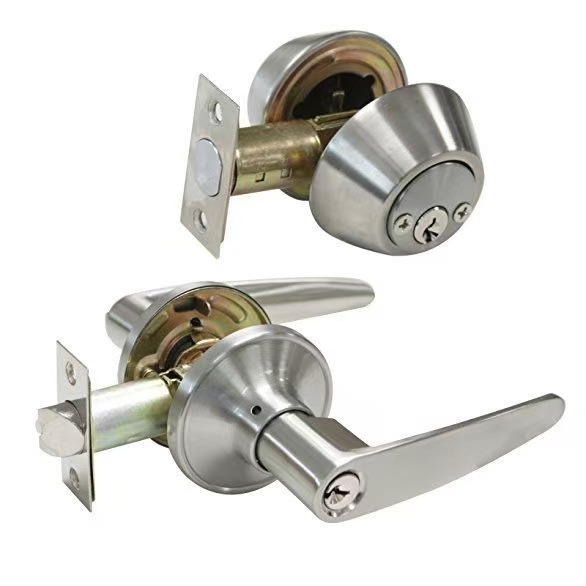
For buyers sourcing cylindrical locks, deadbolts, handle locks, door stoppers, and other architectural hardware, understanding a supplier’s quality control process can help reduce risks and improve purchasing confidence.
The goal is not simply to receive products that look good upon arrival, but to receive hardware that continues to perform reliably long after installation.
Choosing a reliable supplier is not only about quality inspection. Experienced importers also evaluate materials, production systems, communication efficiency, and long-term cooperation capabilities before placing orders. To learn more about how professional buyers assess potential suppliers, read our article Why Experienced Importers Ask More Questions Before Buying Door Locks from China.
Contact Shengzhao Hardware
Looking for a reliable door lock and door hardware supplier in China? Our team is ready to support your OEM, wholesale, and project requirements.
Website: www.shengzhao-hardware.com
WhatsApp/WeChat: +8613144755830
Email: service@shengzhao-hardware.com