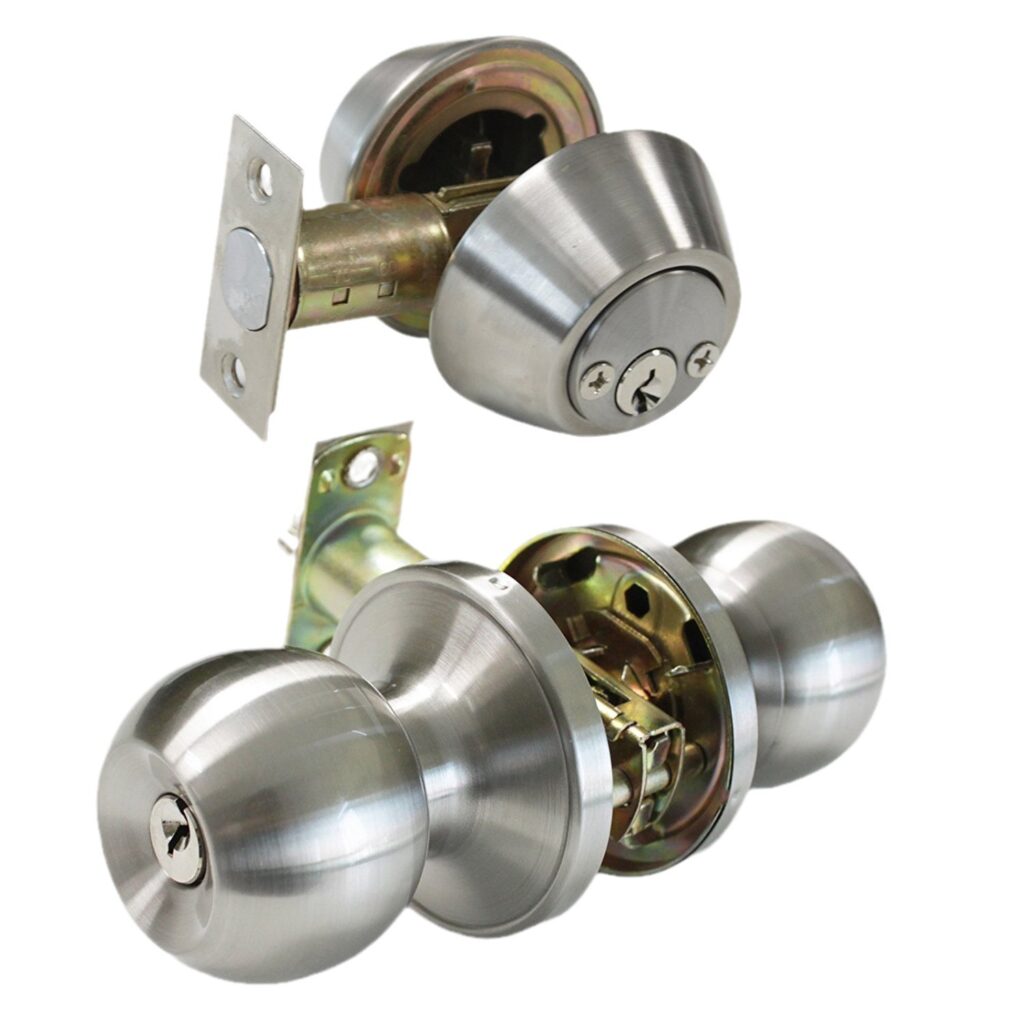
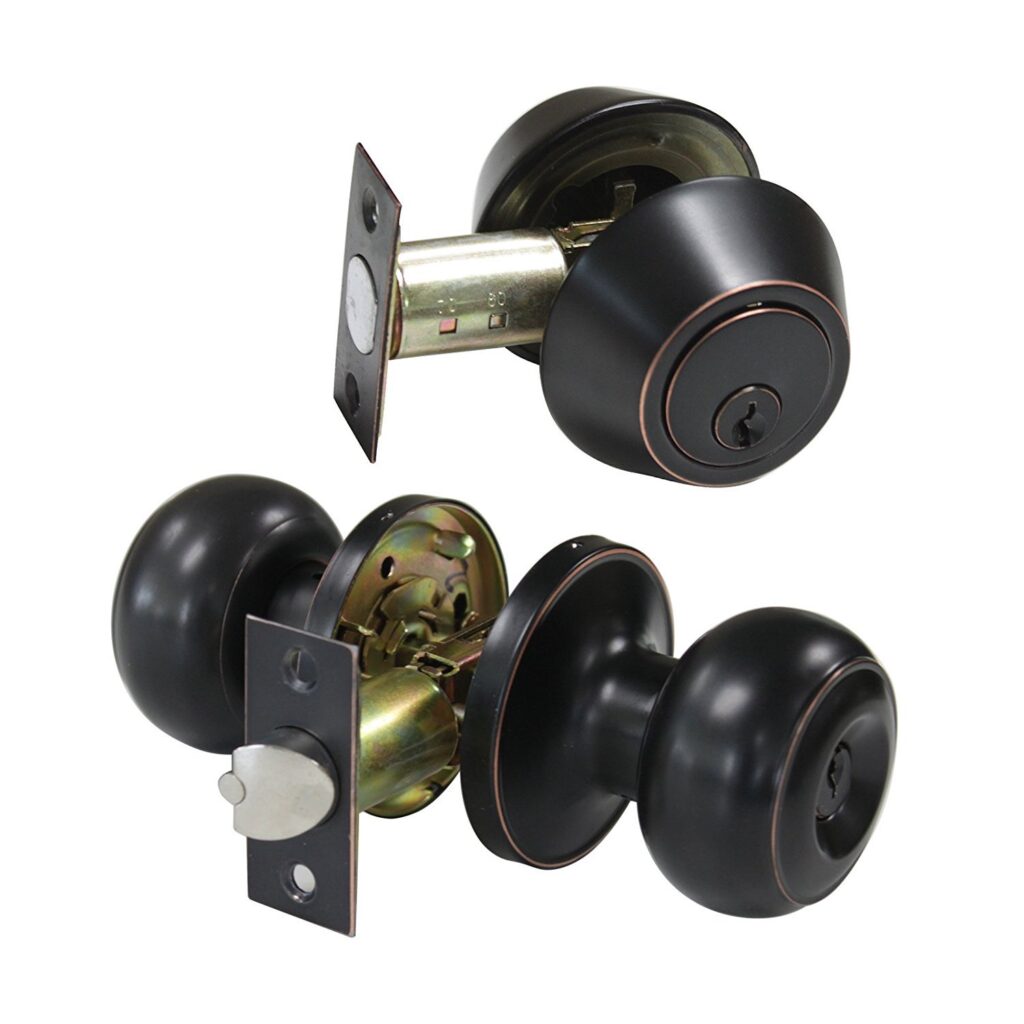
A door lock sample can look perfect when it arrives on a buyer’s desk.
The finish looks clean.
The handle feels comfortable.
The key works smoothly.
The packaging looks professional.
So the buyer approves the sample and places a bulk order.
Then something changes.
A few weeks later, the buyer discovers that some locks feel different from the approved sample. A small percentage of finishes are not quite the same. Some screws are different. The packaging has changed slightly. Or the installation performance is not as consistent as expected.
This is one of the situations experienced importers try very hard to avoid.
The problem is not necessarily that the manufacturer is unreliable. In many cases, the real problem is that the sample approval process was too simple.
After years of working with door locks and door hardware for overseas customers, we have learned that a sample should not only answer the question, “Does this lock look good?”
It should also answer:
“Can this exact quality be reproduced in hundreds or thousands of pieces?”
That is a much more important question for B2B buyers.
- A Sample Is Only One Piece — A Bulk Order Is a Production Process
When a buyer checks one sample, it is easy to focus on appearance.
For example, a tubular knob lock may look exactly as expected. The buyer checks the color, turns the knob several times, tests the key and confirms the dimensions.
Everything seems fine.
But mass production involves many more variables.
The factory needs to control:
●Raw material consistency
●Component dimensions
●Spring and latch performance
●Surface finishing
●Plating or coating thickness
●Assembly
●Screw and accessory specifications
●Packaging
●Final inspection
A sample represents one finished product.
A bulk order represents the ability of the manufacturer to repeat that product consistently.
But consistency should not be evaluated only during the first bulk order. For distributors and importers planning long-term cooperation, the ability to maintain the same standards across repeat door lock orders is equally important.
This is why experienced buyers do not stop at sample approval.
Before moving from sample approval to mass production, buyers should also test the physical lock carefully. For a tubular lever lock, a quick check of lever movement, latch operation, key function and basic assembly can help identify issues that may not be obvious from appearance alone.
For a practical pre-order checklist, see our guide: How to Test a Tubular Lever Lock Sample in 60 Seconds Before a Bulk Order.
They also want to understand how the manufacturer will control production after the sample has been approved.
A successful bulk order also depends on what happens after the purchase order is confirmed, including production communication, inspection, packaging, and shipment preparation.For buyers placing their first large order, understanding how a reliable door lock factory builds buyer confidence before the first bulk order can also help reduce unnecessary sourcing risks.
- The Most Important Question Is Often Not About the Sample
One question we recommend asking is:
“What will you use as the production reference after I approve the sample?“
This sounds simple, but it can reveal a lot about a manufacturer’s production process.
A professional factory should have a clear reference for production.Before approving the reference, buyers should also make sure that the door lock specifications required for the bulk order are clearly confirmed.
Depending on the product, this may include:
●Approved sample
●Technical drawing
●Product specifications
●Material requirements
●Finish reference
●Component list
●Packaging requirements
●Customer-approved details
Without a clear production reference, “same as sample” can become surprisingly subjective.
For example, a buyer may approve a satin nickel finish.
The buyer thinks “satin nickel” means a specific appearance.
The factory may also understand the term, but there can still be differences in brightness, brushing direction, tone or surface texture if the finish is not clearly controlled.
This is especially important when an order contains several thousand pieces.
A small difference that is almost invisible on one sample can become very obvious when hundreds of locks are installed in the same building.
- Finish Is One of the Easiest Things to Underestimate
Door hardware buyers often pay close attention to the product shape but underestimate the importance of surface finishing.
This is understandable.
A lock can have the correct body, correct function and correct dimensions, yet the final appearance may still feel different.
For B2B projects, consistency matters.
Imagine a hotel project requiring 1,000 door locks.
If most of the locks have one appearance but a small batch has a noticeably different finish, the problem is no longer just cosmetic.
This is why buyers should confirm the complete order requirements before production begins, rather than relying only on a general product description or the approved sample. Product specifications, finish, packaging, accessories and other important details should be clearly understood by both sides. For a practical guide to what should be confirmed before a bulk order enters production, see Why a Clear Door Lock Order Confirmation Matters Before You Place a Bulk Order.
The contractor may have to separate the products.
The distributor may receive complaints.
The installation schedule may be affected.
And the buyer has to spend time explaining something that should have been controlled before shipment.
For this reason, finish should be treated as part of the product specification, not simply as a color name on an order sheet.Before committing to a large order, buyers should also look beyond the sample and understand [what a door lock factory should prove before you pay a bulk order deposit], especially regarding production control, quality inspection, and the ability to reproduce the approved specifications.This is also why buyers should confirm the technical specifications of a door lock before placing a bulk order, rather than relying only on the approved sample.
For example, when discussing finishes such as Satin Nickel, Matt Black, Polished Brass or Stainless Steel, buyers should make sure the supplier understands exactly which finish is required.
If possible, the approved sample should remain the physical reference for production.
- Materials Matter More When the Order Gets Larger
Another common mistake is assuming that the material specification is obvious.
It is not always obvious.
A buyer may ask for a “stainless steel door lock,” but stainless steel itself can refer to different grades.
Depending on the product and application, manufacturers may work with materials such as 430 stainless steel, 201 stainless steel or 304 stainless steel.
These materials can have different characteristics and different costs.
This does not automatically mean that one is always “good” and another is always “bad.”
The correct material depends on the application, budget and project requirements.
The important point is consistency.
If the buyer approves a product based on one material specification but the bulk order is produced differently, the final result may not match the original expectation.
This is one reason why material requirements should be confirmed before mass production rather than discussed only after production starts.
For buyers who want a deeper comparison, our article on Door Lock Materials: Brass vs. Stainless Steel vs. Zinc Alloy explains the main differences between these commonly used materials.
- Small Components Can Create Big Problems
When people inspect a door lock sample, they usually look at the main body and handle first.
Very few buyers immediately inspect every small component.
But small components can have a big effect on the final product.
For example:
●Screws
●Springs
●Spindles
●Latches
●Strike plates
●Mounting accessories
●Keys
●Plastic components
A change in one small component may not be obvious from the outside.
However, it can affect installation, operation or the overall experience of the lock.
This is why a professional production process should not focus only on the visible parts.
For bulk orders, the internal components and accessories also need to match the agreed specification.
- “Same Model” Does Not Always Mean “Same Configuration”
Another issue we often see in B2B door hardware sourcing is confusion between similar-looking models.
Two locks may look almost identical from the outside but have different internal configurations.
For example, a tubular knob lock and a tubular lever lock may share some design characteristics, but they are different product types and may be selected for different applications.
Even within the same product family, buyers may have different requirements for:
●Function
●Backset
●Door thickness
●Cylinder configuration
●Material
●Finish
●Keying
●Accessories
This is why the complete product specification should be confirmed rather than relying only on a product photo.
A photo is useful for identifying the model.
It is not a complete technical specification.
- The Approved Sample Should Also Include the Packaging
Packaging is sometimes treated as something that can be finalized at the end.
For B2B orders, that can create unnecessary problems.
The buyer may have approved a product with a certain box, label and instruction sheet, but the production order later uses a slightly different package.
This may seem minor to the factory.
It may not be minor to a distributor.
A distributor selling under its own brand may need:
●Correct logo
●Correct product name
●Correct SKU
●Correct barcode
●Correct quantity per carton
●Correct carton markings
●Correct instruction sheet
For OEM customers, packaging is part of the product experience.
It should therefore be confirmed together with the product instead of being treated as an afterthought.
- What We Check Before a Bulk Order Moves Forward
At Shengzhao Hardware, we have learned that preventing problems is much easier than explaining them after a container has left the factory.Our approach to quality control is also discussed in How Professional Door Lock Manufacturers Prevent Quality Problems Before Shipment.
For a normal B2B order, the important information should be clear before production starts.
This normally includes the product model, material, finish, function, dimensions, accessories and packaging requirements.
For customized or OEM orders, there may be additional details to confirm.
The purpose is not to create unnecessary paperwork.
The purpose is to remove assumptions.
When both the buyer and manufacturer have the same reference, production becomes much easier to control.
This is particularly important for repeat orders.
If a customer orders the same door lock again several months later, the factory should not rely on someone’s memory of the previous order.
The previous approved specification and production reference should be available.
- A Good Sample Approval Process Should Have Two Stages
For overseas B2B buyers, we recommend thinking about sample approval in two stages.
Stage 1: Product Approval
Check the actual product.
Look at:
●Appearance
●Finish
●Function
●Dimensions
●Material
●Key operation
●Latch operation
●Accessories
●Installation requirements
Stage 2: Production Confirmation
Before mass production, confirm that the factory has the same requirements recorded for production.
Check:
●Approved sample reference
●Material specification
●Finish specification
●Product configuration
●Packaging
●Labeling
●Quantity
●Special requirements
This second stage is often overlooked.
Yet it is one of the most useful steps for reducing misunderstandings.
- What Experienced Buyers Really Want From a Supplier
Experienced importers usually do not expect a manufacturer to promise:
“There will never be any problem.”
That is not realistic.
Instead, they want to know:
“What do you do to prevent problems, and what happens if something does not meet the agreed specification?”
That difference is important.
A professional supplier should be able to explain its production and quality-control process in practical terms.
For example:
●How are incoming materials checked?
●How are products assembled?
●How are finishes inspected?
●How are samples kept as references?
●How is bulk production compared with the approved sample?
●How are packaging requirements controlled?
●How is final inspection performed before shipment?
These questions tell a buyer much more than simply looking at a factory’s product catalog.
- Don’t Approve a Sample Too Quickly
A good sample is a positive sign.
But it is not proof that the bulk order will automatically be perfect.
The real test of a manufacturer is its ability to reproduce the approved product consistently.
That is especially important for overseas B2B buyers because returning several thousand door locks is obviously not as simple as returning one sample.
Freight costs, installation schedules, warehouse space and customer relationships are all involved.
This is why a few extra questions before production can save much more time later.
At Shengzhao Hardware, we believe the best approach is straightforward:
Confirm the details. Keep the reference. Control the production. Inspect before shipment.
For buyers, that may sound less exciting than discussing a new lock design.
But in real B2B sourcing, these basic steps are often what make the difference between a smooth order and a difficult one.
Conclusion
A door lock sample is important, but the sample itself is not the final goal.
The real goal is consistency.
When an overseas buyer approves a sample, the manufacturer needs to be able to reproduce the same product, finish, configuration and packaging throughout the bulk order.
That requires more than a good-looking sample.
It requires clear specifications, proper production references and quality control at different stages.
For importers, distributors and project buyers, asking a few additional questions before mass production is usually much cheaper than solving a quality problem after shipment.
If you are sourcing cylindrical locks, tubular knob locks, tubular lever locks, deadbolts or other door hardware for wholesale or building projects, it is worth looking beyond the sample itself.
The better question is not “Does this sample look good?”
It is “Can this manufacturer make the next 1,000 pieces the same way?”
Contact Shengzhao Hardware
Looking for a reliable door lock and door hardware supplier in China? Our team is ready to support your OEM, wholesale, and project requirements.
Website: www.shengzhao-hardware.com
WhatsApp/WeChat: +8613144755830
Email: service@shengzhao-hardware.com