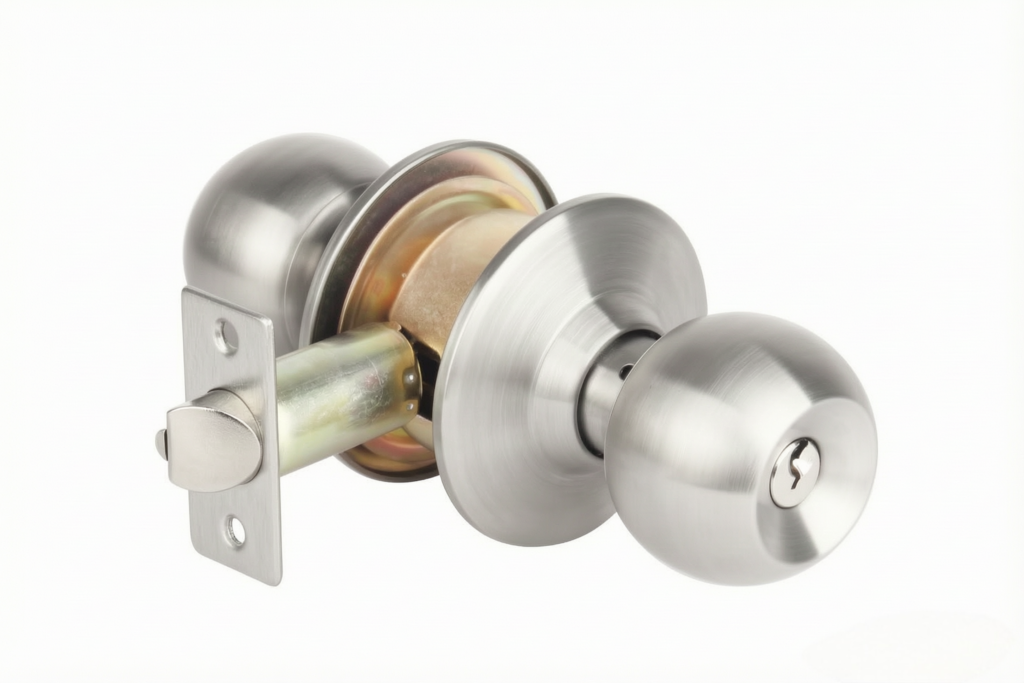
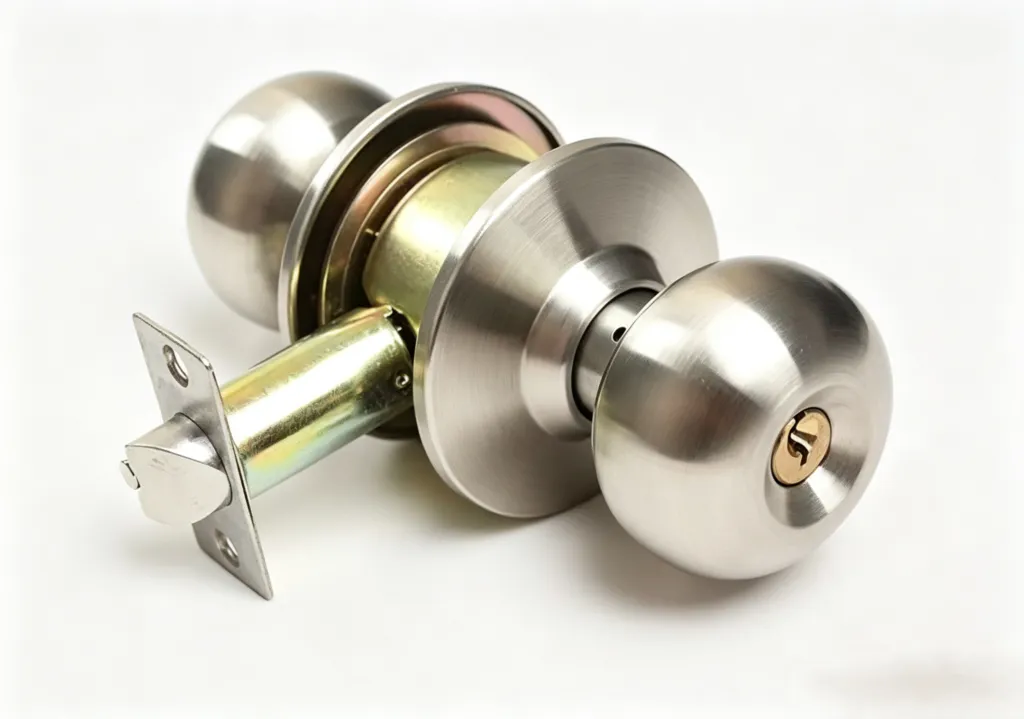
When sourcing mechanical door locks, overseas buyers often pay close attention to the lock body, latch, handles, finish, and packaging.
However, one small component can easily be overlooked: the strike plate.
The strike plate is installed on the door frame, where the latch enters when the door closes. Although it is relatively simple, its dimensions, opening shape, screw-hole positions, and compatibility with the latch can affect installation and the final user experience.
For wholesalers, distributors, and project buyers, this matters because a small component mismatch can become a repeated problem across hundreds or thousands of doors.
Here are the practical points worth checking before confirming a bulk door lock order.
1. Confirm That the Strike Plate Matches the Latch
A strike plate should be suitable for the latch supplied with the lockset.
The opening must allow the latch to enter correctly when the door closes. If the opening is too small, poorly positioned, or unsuitable for the latch shape, the latch may rub against the plate or fail to engage smoothly.
Buyers should therefore confirm the strike plate and latch as a set instead of evaluating each component separately.
For OEM orders or projects using several lock functions, do not assume that every lockset uses an identical strike plate. Check the actual configuration for each model.For a broader checklist, review our guide to door lock compatibility before a bulk order.
2. Check the Strike Plate Dimensions and Shape
Strike plates can differ in overall length, width, thickness, opening dimensions, and corner shape.
Even when two plates look similar in a product photo, their actual dimensions may differ. These differences can matter when the buyer needs to match an existing door-frame preparation or maintain consistency across a project.
Before placing a bulk order, confirm:
- Overall length and width
- Plate thickness
- Latch opening dimensions and shape
- Corner shape, such as rounded or square corners
- Screw-hole positions and spacing
For replacement orders, compare the new component with the existing plate or an approved sample. Visual similarity alone is not sufficient.
3. Verify Screw-Hole Positions and Installation Requirements
Screw-hole positions influence how the strike plate is fixed to the door frame.
If the holes do not match the existing preparation, installers may need to drill new holes or modify the frame. This can add labor, slow down installation, and create inconsistent results across a project.
For distributors supplying replacement hardware, matching the existing screw-hole layout can be particularly important.
For new construction projects, buyers should confirm the intended installation method and coordinate the strike plate dimensions with the door-frame preparation before production is finalized.
4. Check the Strike Plate Together With the Door and Frame
A lockset does not operate in isolation. Its performance also depends on the door, frame, installation position, and alignment between the latch and strike plate.
If the door is misaligned, the latch may contact the edge of the opening instead of entering smoothly. Buyers should not automatically assume that the lock itself is defective when this happens.
For project orders, confirm the intended door and frame conditions and test the complete lockset in a representative installation where practical.
This is especially useful when a buyer is sourcing locks for multiple buildings or door configurations.This is one reason why buyers should understand the causes of door lock installation problems before approving products for a project.
5. Do Not Assume That Similar Finishes Guarantee a Perfect Match
The strike plate is visible when the door is open, so its finish can affect the overall appearance of the hardware.
A buyer may order a lockset in satin nickel, polished brass, black, or another finish. The corresponding strike plate should be checked against the approved finish standard rather than selected by name alone.
Finish names can vary between suppliers, and products that use similar descriptions may not look exactly the same.
For OEM and repeat orders, retain an approved sample or documented finish reference. Confirm whether the strike plate is included in the finish approval and inspection scope.
6. Include the Strike Plate in Sample Approval and Bulk Inspection
A sample may look correct because the buyer has concentrated on the handles, lock body, and operation. Yet the strike plate may receive little attention until installation.
Before approving a sample, check whether the strike plate is included, whether its dimensions match the agreed specification, and whether the latch enters it smoothly during a practical test.
For bulk orders, make the inspection requirements clear. Depending on the product and order agreement, checks may include component presence, dimensions, finish consistency, screw-hole layout, and compatibility with the supplied latch.
The aim is not to add unnecessary inspection steps. It is to identify a mismatch before the same issue is repeate across a large shipment.For more on pre-shipment quality control, read how professional manufacturers prevent quality problems before shipment.
7. Confirm the Complete Component Set Before Production
For bulk and OEM orders, buyers should confirm exactly which accessories are included with each lockset.
The agreed component list may include the strike plate, strike box where applicable, mounting screws, and other model-specific accessories. Do not rely on assumptions based on a previous order or a product photograph.
A clear specification should identify the applicable model, approved component configuration, finish, and packaging requirements.
If a component is changed after approval, confirm the impact on compatibility, appearance, and installation before production continues.
A Practical Checklist for B2B Door Lock Buyers
Before confirming your next order, ask your supplier:
- Does the strike plate match the supplied latch and lock model?
- Are the dimensions, opening shape, and screw-hole positions confirmed?
- Is the finish included in the approved sample or finish standard?
- Have installation conditions and door-frame preparation been considered?
- Is the complete accessory set clearly listed in the order confirmation?
- Will the relevant components be included in sample approval and bulk inspection?
These checks are particularly useful for importers, hardware wholesalers, and project buyers who need consistent products across repeated orders.
Final Thoughts
A strike plate is a small part of a mechanical door lock system, but overlooking it can create avoidable installation work, appearance differences, or compatibility problems.
For B2B buyers, the better approach is to evaluate the complete lockset and its installation components together. Confirming the strike plate before production helps reduce uncertainty and makes bulk-order requirements clearer for both buyer and supplier.
At Shengzhao Hardware, we understand the importance of clear product specifications and practical checks when supplying door locks and door hardware for overseas markets. Buyers can discuss their required models, specifications, and order quantities with our team before confirming an order.
Contact Shengzhao Hardware
Website: www.shengzhao-hardware.com
WhatsApp / WeChat: +8613144755830
Email: service@shengzhao-hardware.com