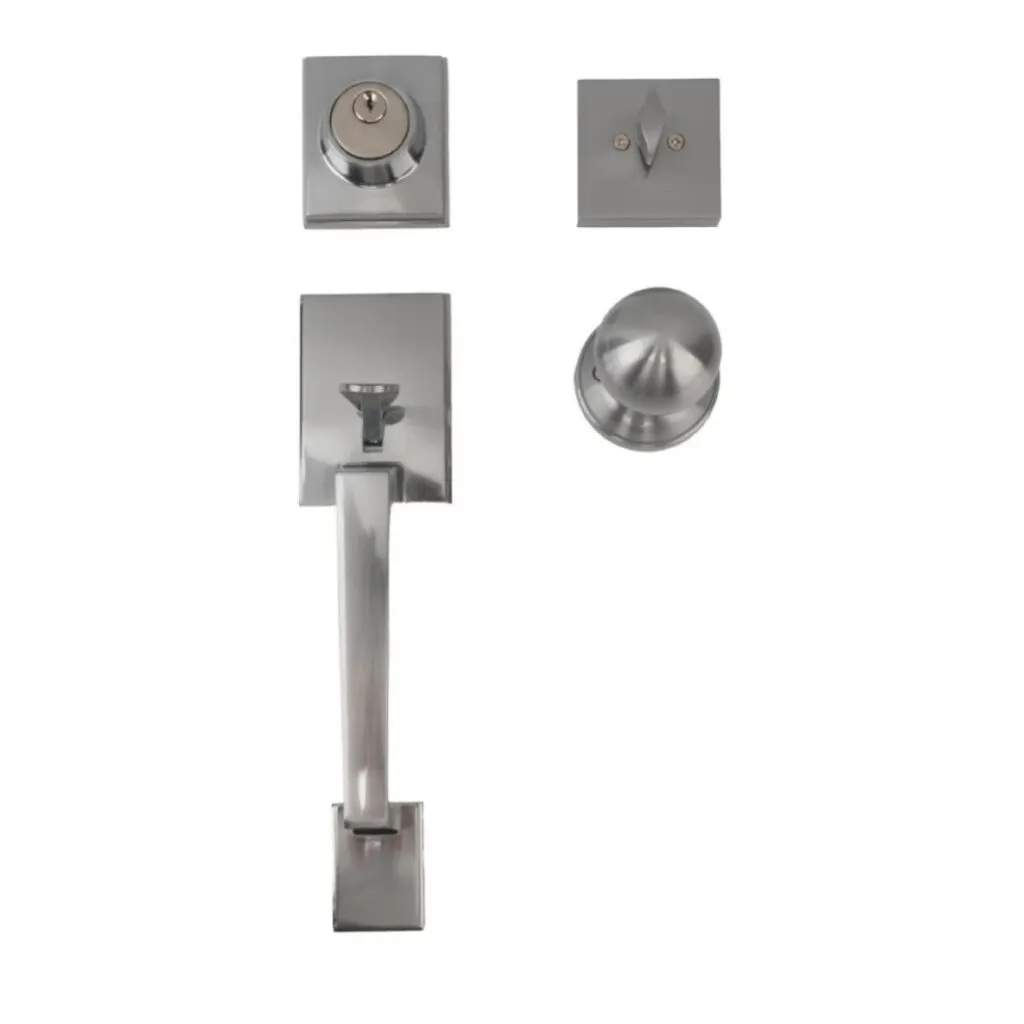
For an overseas B2B buyer, choosing a door lock supplier is not finished when you find a factory with good products and reasonable prices.
In many cases, the real decision comes later.
You have received the quotation.
You have checked the product photos.
You may have received samples.
The sample looks good, the price seems acceptable, and the factory appears experienced.
Then comes the next step:
Should you actually pay the deposit and place the bulk order?
This is where many buyers become more cautious.
A first bulk order involves much more than the quality of one sample. The buyer is committing money, production time, shipping costs, warehouse space, and sometimes even the reputation of their own business.
For this reason, a professional door lock factory should not simply ask a buyer to “trust us.”
It should be able to provide practical evidence that reduces the buyer’s risk before production starts.
Here are the things overseas B2B buyers should look for.
- The Factory Should Be Able to Explain the Product Clearly
A reliable manufacturer should understand its own door locks beyond the product name and catalogue photo.
Before placing a bulk order, a buyer should be able to get clear answers about important specifications such as:
●Material
●Door thickness
●Backset
●Lock function
●Key type
●Cylinder specifications
●Finish
●Installation requirements
●Packaging
●Available quantities
●Production lead time
For example, a tubular lever lock may look very similar to another model in a product catalogue.
However, the internal construction, material, spring performance, finish and other details can be different.
A factory that knows its products well should be able to explain these differences instead of simply saying that the products are “good quality.”
This is particularly important for distributors and project buyers.
The buyer is not only purchasing a physical lock.
They are purchasing a specification that must work in a real project.
- The Sample Should Become a Reference, Not Just a Sales Tool
Sending a sample is easy.
Controlling bulk production according to that sample is much more important.
A buyer may also want to understand why a successful sample approval does not always mean that every detail of the bulk order will remain consistent. This issue is discussed in more detail in our guide on [why a good door lock sample does not always guarantee a problem-free bulk order].
A buyer should therefore ask:
What will happen after I approve the sample?
A professional factory should have a clear process for turning the approved sample into a production reference.
The sample should represent important details such as:
●Appearance
●Finish
●Dimensions
●Function
●Assembly
●Key operation
●Packaging requirements, when applicable
This matters because a common bulk-order problem is not necessarily that every lock is defective.
Sometimes the problem is inconsistency.
One batch may have a slightly different finish.
Some handles may feel tighter or looser.
A small number of cylinders may operate differently.
Packaging may also be different from what the buyer expected.
For a distributor ordering hundreds or thousands of locks, even a small level of inconsistency can create complaints after arrival.
That is why an approved sample should not disappear into a factory drawer after the order is confirmed.
It should remain a useful production reference.
- The Factory Should Be Willing to Discuss Quality Before Production
One of the best signs of a professional supplier is that quality is discussed before the deposit is paid.
A factory should be comfortable talking about questions such as:
●What will be inspected?
●When will inspections take place?
●Which specifications are critical?
●How are functional problems identified?
●How are appearance problems controlled?
●What happens if a problem is discovered during production?
●How will the final goods be checked before shipment?
A supplier that only talks about quality after a buyer complains is reacting to problems.
A supplier that discusses quality before production starts is trying to prevent them.
This difference is important.
For B2B purchasing, prevention is normally much cheaper than correction.
Once a container has arrived in another country, returning or replacing door hardware can become complicated and expensive.
- The Factory Should Not Avoid Difficult Questions
An experienced buyer does not ask difficult questions to make the supplier uncomfortable.
They ask because they have seen what can happen when important details are not confirmed.
For example:
“What happens if the finish is different from the approved sample?”
“What if we need to change the packaging?”
“Can you maintain the same specifications for repeat orders?”
“How do you control production consistency?”
“What happens if we discover a problem before shipment?”
These questions are not signs that the buyer does not trust the factory.
They are part of professional B2B purchasing.
A good manufacturer should be willing to discuss them.
In fact, clear answers to difficult questions can create more confidence than a long presentation about how many years the factory has been operating.
Experience matters.
But how that experience is used to control risk matters more.
- Production Communication Should Be Clear Before the Order Starts
Another important point is communication.
Many problems that appear to be “quality problems” actually begin as communication problems.
For example, a buyer may think:
“We ordered the same lock as last time.”
The factory may understand:
“We produced the same model number.”
But the buyer may have changed the finish, packaging, key quantity, carton marking or another detail in the meantime.
If these changes are not clearly recorded, both sides may believe they are correct.
This is why professional order confirmation should be detailed.
Important specifications should be written down rather than relying on conversations such as:
“Same as before.”
For a clearer understanding of what should happen once the purchase order has been confirmed, buyers can also read our practical guide on [what should happen after you place a door lock order].
For B2B buyers, a clear purchase specification can protect both sides.
It tells the factory exactly what to produce.
It also gives the buyer something concrete to check against later.
- The Factory Should Be Able to Show How It Handles Pre-Shipment Quality
A buyer does not necessarily need to stand inside the factory every day.
But the buyer should understand how the factory checks the goods before shipment.
For mechanical door locks, quality control may involve different aspects depending on the product, including:
●Appearance
●Dimensions
●Assembly
●Locking and unlocking function
●Key operation
●Handle or knob operation
●Finish consistency
●Packaging
●Quantity
●Carton markings
The exact inspection points should depend on the product and the buyer’s requirements.
The important point is that quality should not be treated as something checked only after the goods reach the customer.
The earlier a problem is found, the easier it usually is to correct.
This is one reason professional buyers often ask about the factory’s production and inspection process before placing a large order.
- The Factory Should Understand That Repeat Orders Are Different From First Orders
A first order is only the beginning of a B2B relationship.
For a distributor, importer or hardware wholesaler, the real value of a supplier is often demonstrated on the second, third and tenth order.
The buyer needs to know:
Can the factory reproduce the same product again?
This is especially important for mechanical door locks.
Mechanical locks do not normally change as quickly as electronic products.
A distributor may sell the same model for years.
A project buyer may need the same specification for different construction phases.
A wholesaler may reorder the same lock every few months.
Therefore, consistency between orders can be more valuable than making one excellent first batch.
This is why long-term B2B buyers should pay attention not only to the first order, but also to [why door lock consistency matters more than a good first order].
A supplier should understand that the goal is not simply to make today’s order acceptable.
The goal is to make the next order predictable as well.
- Price Alone Cannot Prove That a Factory Is Reliable
Price is important.
Every B2B buyer has a target cost.
But price cannot answer questions such as:
●Will the specifications remain consistent?
●Will the finish match the approved sample?
●Will the factory communicate when something changes?
●Will the goods be inspected before shipment?
●Can the supplier reproduce the same product on repeat orders?
●Will problems be discussed honestly?
A cheaper quotation can become expensive if the buyer later has to deal with rework, replacements, customer complaints or delayed projects.
This does not mean the most expensive supplier is automatically the best supplier.
It means that the real purchasing cost is larger than the unit price.
Professional buyers therefore compare the supplier’s ability to control risk together with the quotation.
- What Should a Buyer Ask Before Paying the Deposit?
Before confirming a bulk door lock order, an overseas buyer can use a simple checklist.
Product
●Is the material clearly confirmed?
●Is the finish clearly confirmed?
●Is the backset confirmed?
●Is the applicable door thickness confirmed?
●Is the lock function confirmed?
●Are key and cylinder requirements confirmed?
Sample
●Has the final sample been approved?
●Will the approved sample be used as a production reference?
●Are critical specifications documented?
Production
●Is the production lead time confirmed?
●Are important changes recorded?
●Does the factory understand the required specifications?
Quality
●What will be inspected?
●When will the inspection take place?
●How are functional problems controlled?
●How are appearance and finish problems controlled?
Shipment
●Is the packaging confirmed?
●Are carton markings confirmed?
●Will the quantity be checked before shipment?
●Will the buyer receive appropriate production or inspection information?
These questions do not guarantee that every future order will be perfect.
No manufacturer can honestly promise that.
But they can help a buyer understand whether the supplier has a structured approach to managing the order.
- What a Professional Door Lock Factory Should Really Sell
A door lock factory is obviously selling door locks.
But for an overseas B2B customer, that is not the whole value of the supplier.
The buyer is also looking for:
Predictability.
Predictability means knowing what will happen after the purchase order is confirmed.
The buyer wants to know that the approved specification will be understood.
The production team will work according to the confirmed requirements.
Quality problems will be identified before shipment whenever possible.
Changes will be communicated.
And when the buyer orders the same product again, the factory will understand that consistency matters.
This is especially important when supplying distributors, wholesalers, hardware importers and building projects.
A good supplier does not make the buyer feel that every order is a new experiment.
The buyer should feel that the next order is based on an established process.
- Trust Should Be Built Before the Deposit, Not After the Problem
The strongest supplier relationships do not begin when a problem occurs.
They begin before the first bulk order.
A professional door lock manufacturer should give the buyer enough information to make a reasonable purchasing decision.For more practical examples of how manufacturers can build buyer confidence before the first bulk order, see our guide on [how a reliable door lock factory builds buyer confidence before the first bulk order].
That does not mean promising “zero problems.”
It means showing the buyer how the factory works, what information needs to be confirmed, how production is controlled and how quality is checked.
For overseas B2B buyers, this type of transparency is valuable because the factory and buyer may be thousands of kilometres apart.
The buyer cannot simply walk into the factory whenever there is a question.
Clear communication and documented specifications therefore become part of the supplier relationship.
- The Best Question Is Not “Can You Guarantee Quality?”
There is one question that sounds simple but is not always useful:
“Can you guarantee the quality?”
Most suppliers will say yes.
A better question is:
“How do you control quality before the goods are shipped?”
The second question produces a much more useful conversation.
It moves the discussion away from promises and toward processes.
And for a B2B buyer, processes are easier to evaluate.
A factory can tell you what it checks.
It can explain what information it needs from you.
It can show how production follows the approved specifications.
It can explain how problems are handled before shipment.
These details provide much more useful information than a simple statement that the factory provides “high quality products.”
Final Thoughts
Before paying a deposit for a bulk door lock order, overseas buyers should look beyond the sample, quotation and factory introduction.
The more important question is:
What can the factory prove about the way it will handle my order?
A reliable supplier should be able to explain its products clearly, confirm specifications carefully, use approved samples as production references, communicate changes, discuss quality control and support consistency across repeat orders.
For B2B buyers, trust should not depend on a promise.
It should be built through clear specifications, transparent communication and repeatable production processes.
That is what turns a first order into the beginning of a long-term supplier relationship.
If you are sourcing mechanical door locks or door hardware for distribution, wholesale or building projects, choosing a manufacturer that understands these details can make the purchasing process much more predictable.
Shengzhao Hardware supplies mechanical door locks and door hardware for overseas B2B buyers, including distributors, wholesalers and project customers.
For product specifications, OEM requirements or bulk orders:
Contact Shengzhao Hardware
Website: www.shengzhao-hardware.com
WhatsApp / WeChat: +8613144755830
Email: service@shengzhao-hardware.com