When international buyers purchase door locks in bulk, price is usually one of the first factors they compare.
A supplier offers USD 4.20 per lock. Another supplier offers USD 4.80. The cheaper quotation naturally looks attractive.
However, experienced importers and project buyers know that the lowest price is rarely the biggest cost.
The real cost often appears after production:
●Locks cannot fit the existing doors.
●The backset measurement is incorrect.
●The cylinder system does not match local requirements.
●The finish color is different from the approved sample.
●The lock function is not suitable for the project application.
●Installation teams spend extra time fixing problems.
For large projects, a small specification mistake can create thousands of dollars in additional costs. Buyers can also see our guide on [Why Bulk Door Lock Prices Are Different] to better understand how quotation differences affect the real cost of a bulk order.
This is why professional buyers focus on one thing before price:
Are the door lock specifications correct for the real application?
This is why professional buyers focus on one thing before price:
Are the door lock specifications correct for the real application?
But specifications are only one part of choosing the right door lock. Buyers should also consider whether the selected model fits the local market, installation habits and customer requirements. For more practical guidance, see Why Door Locks Should Be Chosen for the Local Market, Not Just From a Supplier’s Catalog.
- Why Specifications Are More Important Than Unit Price
Many new buyers think purchasing door hardware is simple:
Choose a design → Confirm quantity → Negotiate price → Place order.
This process works for small retail purchases.
However, B2B bulk orders are different.
A door lock is not only a product. It is a complete mechanical solution that must match:
●Door thickness
●Door preparation
●Usage frequency
●Security requirements
●Local standards
●Installation environment
A lock that works perfectly on one door may fail completely on another project.
For example:
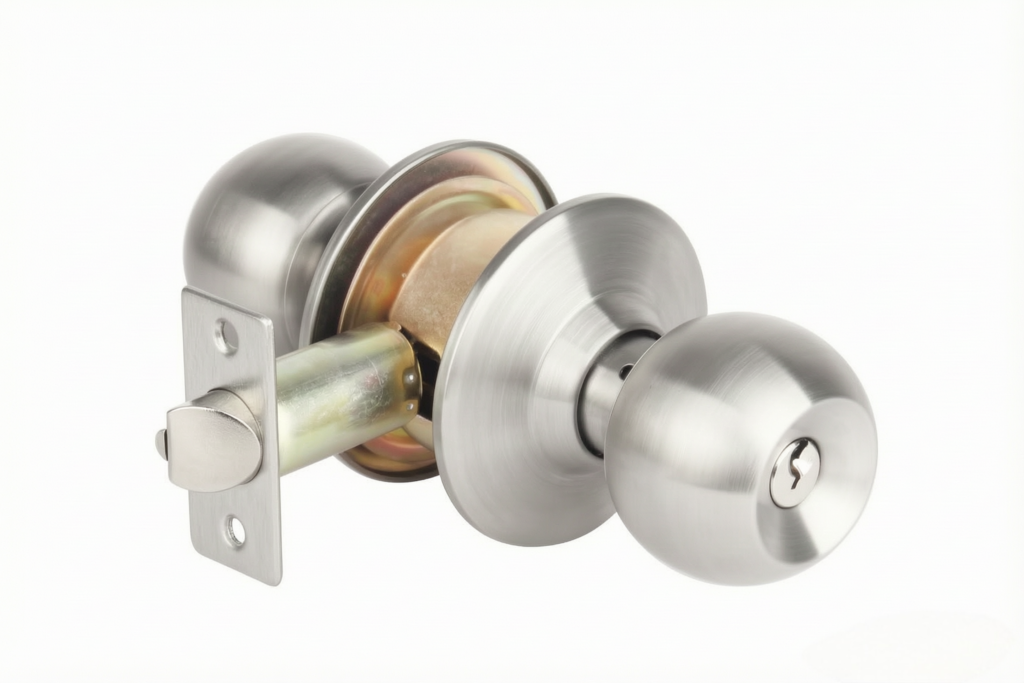
A distributor in one country may purchase a cylindrical knob lock with a 60mm backset because it is common in their market.
Another buyer may need a 70mm backset because of local door standards.
The appearance is almost identical, but the installation result is completely different.
For bulk buyers, compatibility problems are much more expensive than a slightly higher purchase price.
- The Most Important Door Lock Specifications Buyers Should Confirm
Before placing a large order, professional buyers normally confirm several technical details.Specifications are not limited to measurements such as door thickness and backset. Material selection also needs to match the application, environment, usage frequency and project requirements. For more guidance, see our article on [door lock material for B2B projects].
Door Thickness Range
Door thickness is one of the most common causes of installation problems.
Different markets use different door constructions.
Common door thickness ranges include:
●35-45mm
●40-50mm
●45-55mm
If the lock body, spindle, or fixing screws are not designed for the correct thickness, installers may experience:
●Loose handles
●Incorrect latch movement
●Difficult installation
●Reduced product lifespan
A reliable manufacturer should confirm door thickness requirements before production instead of simply quoting based on product pictures.
Backset Measurement
Backset is another specification that many first-time importers overlook.
The backset refers to the distance from the edge of the door to the center of the lock spindle or cylinder position.
Common sizes include:
●60mm
●70mm
●Other customized dimensions
A wrong backset can cause:
●Door drilling problems
●Latch misalignment
●Installation delays
●Additional modification costs
For replacement projects, buyers should always provide existing lock measurements or installation drawings before confirming the order.
- Lock Function Selection Is More Than Choosing a Style
Many buyers focus on appearance:
“Can you make this lock with a matte black finish?”
“Can you copy this handle design?”
However, the lock function is usually more important than the appearance.
Different applications require different functions.
For example:
Office Projects
●Typical requirements:
●Privacy function
●Easy maintenance
●Master key compatibility
Hotel Projects
Typical requirements:
●Key management
●High operation frequency
●Consistent appearance across rooms
Residential Developments
Typical requirements:
●Cost efficiency
●Stable supply
●Easy installation
Commercial Buildings
Typical requirements:
●Higher durability
●Security performance
●Long service life
Choosing the wrong function can create problems even when the lock quality itself is good.
- Why Samples Sometimes Do Not Represent Bulk Production
Many buyers have experienced this situation:
“The sample was perfect, but the bulk shipment was different.”We also discuss this common purchasing problem in [The sample looked good-so why did the bulk door lock order still have problems?].This is also why buyers should avoid changing confirmed door lock specifications after production has already started, as even a small change can affect components, finishing, assembly, packaging and delivery.Before placing a large order, buyers should also understand what a reliable door lock factory does to build confidence before the first bulk order, including specification confirmation, sample approval, production communication, quality control and packaging.
Why does this happen?
Because the sample represents one production moment.
Mass production involves:
●Hundreds or thousands of components
●Different production batches
●Surface finishing processes
●Assembly procedures
●Quality inspections
A professional manufacturer should control consistency through:
●Incoming material inspection
●Production process checks
●Assembly testing
●Surface finish inspection
●Random final inspection
For overseas buyers, the question is not only:
“Can you make a sample?”
The better question is:
“How do you ensure 5,000 pieces maintain the same quality as the sample?”
After the production standards are confirmed, buyers should also understand how the supplier manages the order through production, inspection, packing, and shipment.
- Material Choice Also Affects Long-Term Performance
Two door locks can look almost identical but have completely different performance because of material differences.For a more detailed comparison of common door lock materials, see our guide to [Door Lock Materials: Brass vs. Stainless Steel vs. Zinc Alloy].
Common materials include:
Stainless Steel
Advantages:
●Good corrosion resistance
●Suitable for commercial environments
●Modern appearance
Common applications:
●Hotels
●Offices
●Public buildings
Brass
Advantages:
●Excellent machining performance
●Premium appearance
●Good durability
Common applications:
●High-end residential projects
●Decorative hardware
Zinc Alloy
Advantages:
●Cost-effective
●Flexible designs
●Suitable for large-scale projects
Common applications:
●Residential developments
●Standard commercial applications
The correct material depends on the project requirement, not simply the buyer’s target price.
- How Professional Buyers Evaluate Door Lock Suppliers
Experienced importers usually do not ask only:
“How much is your price?”
They ask:
“Can you support our project requirements?”
A professional supplier should be able to provide:
Technical Support
Including:
●Specification confirmation
●Installation advice
●Product recommendations
Stable Production
Including:
●Consistent quality
●Repeat orders
●Reliable lead time
OEM Capability
Including:
●Custom logo
◆Custom packaging
●Customized finishes
●Special functions
Quality Control Process
Including:
●Material checking
●Function testing
●Appearance inspection
●Shipment inspection
A supplier who understands specifications can help buyers avoid problems before production starts.
- The Best Purchasing Strategy for Global Door Hardware Buyers
The most successful buyers usually follow this process:
Step 1: Define the Application
Understand:
●Where will the lock be installed?
●How frequently will it be used?
●What security level is required?
Step 2: Confirm Technical Specifications
Check:
●Door thickness
●Backset
●Cylinder type
●Lock function
●Finish requirement
Step 3: Test Samples
Before bulk production:
●Install the sample
●Test the operation
●Confirm appearance
Step 4: Confirm Production Standards
Make sure the supplier understands:
●Approved sample
●Inspection requirements
●Packaging requirements
Step 5: Build Long-Term Cooperation
For distributors and project buyers, a reliable manufacturing partner is more valuable than a one-time low-price supplier.
Conclusion: Smart Buyers Purchase Specifications, Not Just Door Locks
In international door hardware purchasing, price matters.
But specifications decide whether the project succeeds.
A cheaper lock that creates installation problems, customer complaints, or replacement costs is not actually cheaper.
Professional buyers understand that the best supplier is not always the one with the lowest quotation.
It is the manufacturer who understands:
●Your market
●Your installation requirements
●Your project challenges
●Your long-term business goals
At Shengzhao hardware, we focus on helping global buyers source reliable door locks with stable quality, OEM support, and manufacturing experience.
Before placing your next bulk order, make sure you are not only comparing prices.
Compare specifications, production capability, and long-term reliability.
About Our Door Lock Manufacturing Experience
With over 16 years of experience in door hardware manufacturing, we support global distributors, wholesalers, and project contractors with OEM door lock solutions.
Our manufacturing capabilities include:
●Cylindrical locks
●Tubular knob locks
●Tubular lever locks
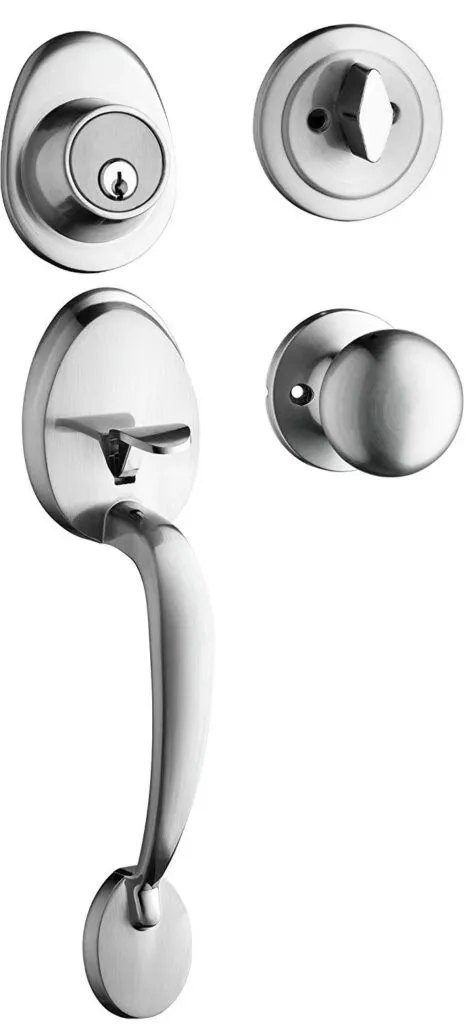
●Deadbolt
●Handle lockset
●Combo lockset
●Stainless steel door hardware
●Zinc alloy door locks
●Customized OEM door hardware
We help overseas buyers with:
●Product selection
●Specification confirmation
●Sample development
●OEM customization
●Bulk production
●Quality inspection support
If you are looking for a reliable door lock manufacturer for your next project or wholesale order, feel free to contact our team.
Website: www.shengzhao-hardware.com
WhatsApp/WeChat: +8613144755830
Email: service@shengzhao-hardware.com