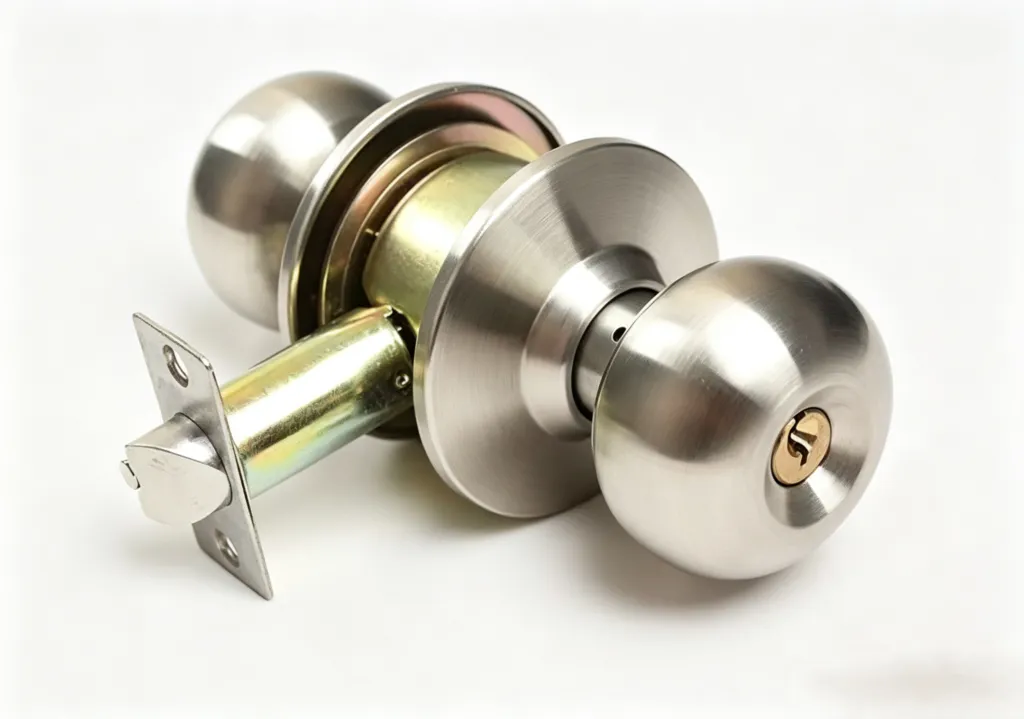
For overseas buyers sourcing mechanical door locks in bulk, many specifications are discussed before production starts.
Lock function.
Material.
Finish.
Backset.
Door thickness.
Cylinder type.
Packaging.
But there is another detail that can easily be overlooked during the quotation and order-confirmation stage:
How should the locks be keyed?
For a small retail purchase, this may not seem very important. For a wholesale order, apartment project, hotel project, office building, or multi-door installation, however, the keying arrangement can directly affect how the locks are used after installation.
Common keying options include keyed different, keyed alike, and, for some commercial applications, master-keyed systems. Commercial lock manufacturers commonly specify keying as part of the ordering process.
For B2B buyers, the important question is not simply which option sounds better.
The real question is:
Which keying arrangement matches the actual project and local market?
- What Does “Keyed Different” Mean?
With keyed different (KD) locks, different locks use different key combinations.
For example:
●Lock A → Key A
●Lock B → Key B
●Lock C → Key C
●Lock D → Key D
A key for one lock normally does not operate the other locks.
This arrangement can be useful when individual doors need separate access.
For example, imagine an office building with several independent rooms. If each room should have its own key, keyed different may be the more appropriate configuration.
It can also be suitable for wholesalers selling individual locksets to different end users.
However, buyers should not assume that every bulk order should automatically be keyed different.
For a project with many doors, having a different key for every door may create unnecessary key-management work.
That leads to another important option.
- What Does “Keyed Alike” Mean?
Keyed alike (KA) means that a group of locks can be operated by the same key.
For example:
●Lock A → Key 1
●Lock B → Key 1
●Lock C → Key 1
●Lock D → Key 1
Instead of carrying several different keys, the user can operate multiple locks with one key.
This can be convenient for certain residential projects, rental properties, small commercial buildings, storage areas, or other applications where the same person needs access to several doors.
Some manufacturers also offer different ways of organizing keyed-alike groups. For example, commercial keying systems may allow multiple locks to be grouped under specific keying requirements rather than simply making every lock in a large order identical.
This distinction is important for B2B buyers.
“Keyed alike” does not always mean:
Make every lock in the entire order use the same key.
A large project may instead require several separate key groups.
For example:
●Group A → 20 locks → same key
●Group B → 30 locks → another key
●Group C → 50 locks → another key
The exact arrangement should be confirmed before production.
- What About Master Keying?
Master keying is different from simply making several locks keyed alike.
In a master-keyed system, different keys can operate different levels of access.
For example:
●Individual room key → opens one specific room
●Department key → opens several rooms
●Master key → opens a larger group of doors
This type of system is more relevant to certain commercial buildings, offices, hotels, institutions, and larger projects.
Not every mechanical door lock or cylinder is automatically suitable for a master-keyed system.
Therefore, if a project requires master keying, the buyer should communicate this requirement before the supplier confirms the cylinder and key system.
Commercial manufacturers may offer factory master keying as a specific ordering option, which shows why keying should be treated as a product specification rather than an afterthought.
- Why B2B Buyers Should Decide Keying Before Production
One common mistake is to finalize the visible specifications first and leave the key arrangement until the end.
The buyer may confirm:
●Lock model
●Finish
●Quantity
●Backset
●Packaging
●Carton marks
Then, shortly before production, someone asks:
“Should all locks use the same key?”
This can create unnecessary communication and production risk.
Keying can involve cylinders, key blanks, pinning or combination arrangements, key quantities, and grouping requirements.
Therefore, it should be included in the order confirmation instead of being treated as a small detail.
For a bulk order, the supplier and buyer should ideally confirm the keying requirement together with the other product specifications.
- Five Keying Details Buyers Should Confirm
Before placing a bulk order, overseas buyers should clarify at least the following points.
- Keyed Different or Keyed Alike?
Do not simply write “with keys.”
State clearly whether the order requires:
KD – Keyed Different
or
KA – Keyed Alike
If the order contains multiple groups, explain how the groups should be arranged.
- How Many Keys Per Lock?
The number of keys supplied with each lock should also be confirmed.
For example:
●2 keys per lock
●3 keys per lock
●Different key quantities for different groups
This is especially important for project orders where the keys will later be distributed to different users.
- How Should Large Orders Be Grouped?
A buyer ordering 500 locks may not want all 500 locks keyed alike.
The requirement might be:
●100 locks per key group
●50 locks per key group
●Different key groups for different buildings
The quantity and grouping should be written clearly in the purchase specification.
Some commercial keying systems explicitly distinguish keying by quantity and keying by group, showing how important this distinction can become in larger orders.
- Can Future Reorders Match the Existing Key System?
This is an especially important question for wholesalers and project buyers.
Suppose a customer buys 200 locks today and needs another 50 six months later.
If the new locks need to work with the existing keys, the buyer should ask the supplier whether future orders can be matched to the original keying arrangement.
Do not assume that a future batch will automatically match an earlier batch. Future repeat orders should still be checked against the original specifications.
Ask the supplier what information needs to be retained for repeat orders.
This is one reason experienced buyers keep detailed product and order records instead of relying only on the product name.
- How Will the Keys Be Packed and Identified?
For a large project, hundreds of keys can become difficult to manage if they are not properly organized.
Buyers may need to confirm:
●Whether keys are packed with each lock
●Whether keys can be packed separately
●Whether key groups can be identified
●Whether carton or inner-box markings are required
●Whether different key groups need separate packaging
Commercial lock ordering systems can also specify that keys be packed independently when required.
These details may look small before shipment but can save considerable time during installation and distribution.
- Keying Is Not Just a “Security” Question
B2B buyers sometimes think keyed alike automatically means lower security, while keyed different automatically means higher security.
The actual situation is more practical.
The correct keying arrangement depends on how access needs to be managed.
For example:
A rental property may benefit from grouped keyed-alike locks for certain applications.
An office building may need different access levels.
A distributor may prefer keyed-different locks because its customers have different requirements.
A hotel or larger commercial project may require a structured master-key system.
Therefore, the best keying arrangement is not determined by the lock’s appearance.
It is determined by the intended application.
- Why Keying Should Be Written Clearly on the Purchase Order
For international B2B orders, communication should not depend on assumptions.A clear door lock order confirmation can help both the buyer and supplier confirm important details before production.
A buyer might write:
“500 pcs, with keys.”
A supplier may understand this differently from the buyer.
A clearer specification could look like:
500 pcs cylindrical lever locks
100 sets keyed alike per group
5 key groups
2 keys per lock
Key groups packed separately
The exact format will depend on the product and supplier, but the principle is simple:
The more specific the keying requirement, the less room there is for misunderstanding.
This is especially important when the order involves multiple models, finishes, functions, or project locations.
- What Buyers Should Ask the Supplier Before Ordering
Before confirming a bulk door lock order, experienced buyers ask the supplier before ordering to make sure important requirements are understood.
1.Is the standard configuration keyed different or keyed alike?
2.Can the locks be supplied in keyed-alike groups?
3.Can different models use the same key system?
4.How many keys are included with each lock?
5.Can future repeat orders match the previous keying arrangement?
6.Can key groups be separately packed and identified?
7.Is master keying available if the project requires it?
8.What information does the supplier need before production starts?
These questions do not take long to ask.
But they can prevent confusion later.
Conclusion: Treat Keying as an Order Specification
For overseas B2B buyers, choosing a mechanical door lock is not only about the lock body, finish, material, or price.
The keying arrangement can also affect installation, access management, product distribution, and future repeat orders.
Keyed different, keyed alike, and master-keyed systems serve different purposes.
The right choice depends on the actual application and how users need to access the doors.
Before placing a bulk order, make the keying requirement clear and include it in the order confirmation.
A professional supplier should be able to discuss this requirement with you before production rather than leaving it to the last minute.
For wholesalers, distributors, and project buyers, this small specification can make a large order much easier to manage.
Contact Shengzhao Hardware
Website: www.shengzhao-hardware.com
WhatsApp / WeChat: +8613144755830
Email: service@shengzhao-hardware.com