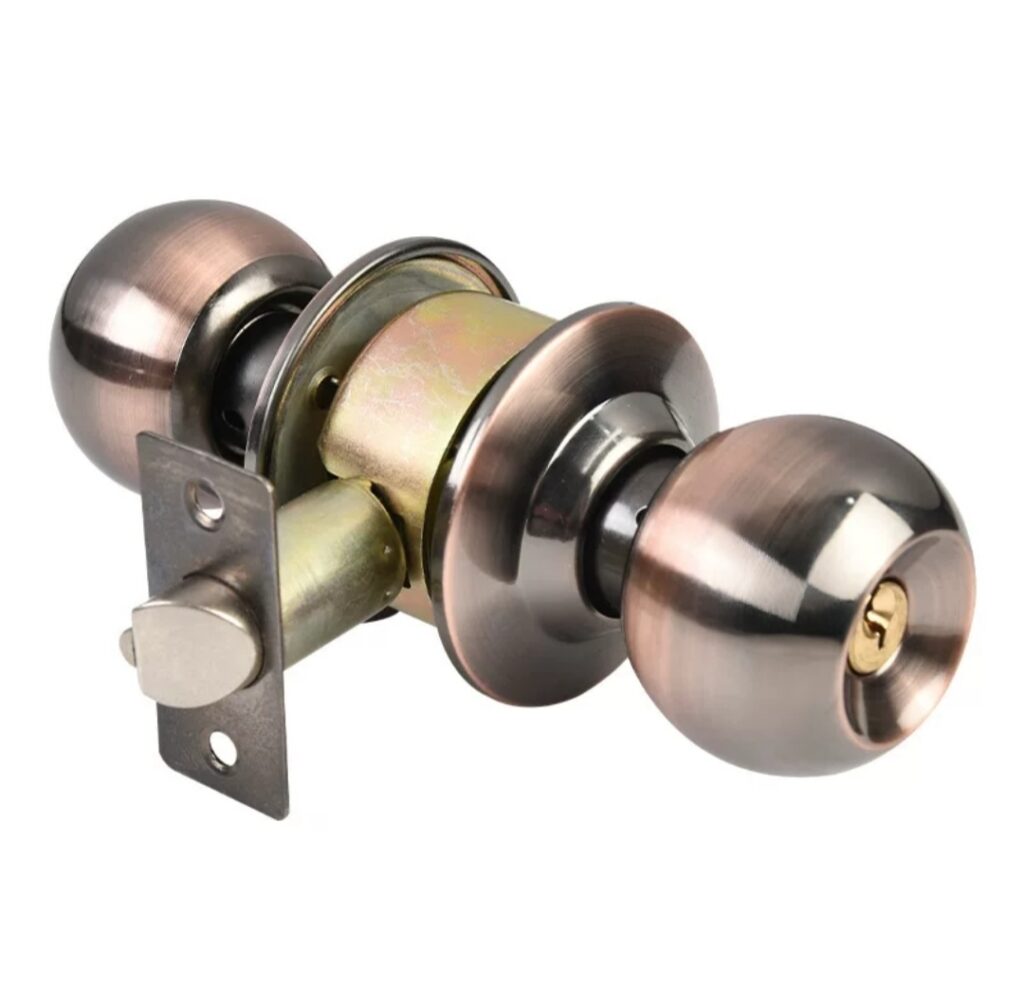
For overseas B2B buyers, a door lock order does not become safe simply because the price has been agreed.
Before production starts, many small details still need to be confirmed.
The lock model may be clear.
The quantity may be clear.
The price may be clear.
But what about the finish, backset, key function, packaging, accessories, logo requirements, or delivery details?
For a small trial order, a misunderstanding may be inconvenient.
For a bulk order, the same misunderstanding can become expensive.
This is why experienced importers and distributors pay attention not only to the product itself, but also to how clearly the order is confirmed before production.
- The Product Model Should Be Clearly Identified
A product photo alone is not always enough.
Some door locks can look very similar while having different specifications, functions, materials or configurations.
A professional order confirmation should clearly identify the exact model being purchased.If you are comparing different types of tubular door locks, it is also important to understand how their functions and applications differ. Our guide, Tubular Lever Lock vs Tubular Knob Lock: How Global Buyers Choose the Right Door Lock for Different Projects, explains the practical differences buyers should consider before selecting a product for bulk purchasing.
For example, the buyer and supplier should confirm:
●Product model
●Lock function
●Door thickness
●Backset
●Finish
●Material
●Key or cylinder configuration
●Required accessories
Keying requirements should also be clearly confirmed before production, especially when the order involves keyed alike, keyed different, or multiple key groups. See our guide on [Keyed Alike vs. Keyed Different Door Locks: What B2B Buyers Should Confirm Before Ordering] for practical points B2B buyers should check before placing a bulk order.
This helps prevent a common problem: both sides believe they are talking about the same product, while their actual specifications are different.
For B2B buyers, the product model number should be treated as an important reference throughout the order.
If you are comparing similar tubular door locks, our guide on [Tubular Lever Lock vs Tubular Knob Lock: How Global Buyers Choose the Right Door Lock for Different Projects] explains some of the practical differences buyers should consider.
- The Finish Should Not Be Confirmed by Color Name Alone
Terms such as Satin Nickel, Black, Antique Brass or Stainless Steel may sound clear, but buyers should still confirm the actual finish required for the order.
The same general color name can appear different depending on the base material and surface treatment.
For this reason, buyers should clarify whether the finish should follow:
●An approved sample
●A previous order
●A specific finish reference
●A factory-standard finish
●A buyer’s own specification
This becomes especially important when a distributor needs to maintain consistency across several orders.
A small difference in appearance may not matter during a single sample review, but it can become noticeable when hundreds or thousands of pieces are displayed together.
- Packaging Details Should Be Confirmed Before Production
Packaging is another area where assumptions can create problems.
A buyer may expect one lock per box, while the supplier prepares several pieces per carton.
Or the buyer may need:
●Individual product boxes
●Installation screws
●Keys
●Mounting accessories
●Barcodes
●Product labels
●Carton marks
●Customer logo
●Neutral packaging
These details should not be left to assumptions.
For overseas distributors and wholesalers, packaging is part of the selling process.
The products need to arrive not only safely, but also in a form that the buyer can receive, identify, store and distribute efficiently.
Packaging requirements can become even more important after the goods reach the buyer’s warehouse. For a practical look at the small packing details that can affect receiving, storage and distribution, see When Door Lock Orders Arrive: 6 Small Packing Details That Matter to B2B Buyers.
For more details, see our practical guide: [When Door Lock Orders Arrive: 6 Small Packing Details That Matter to B2B Buyers].
- Changes After Production Starts Can Be Costly
One of the most important reasons to confirm the order carefully is that some changes become difficult once production has started.
Changing a specification before production is very different from changing it after components have already been purchased, assembled or packed.Besides confirming the order specifications, buyers should also make sure the selected lock is compatible with the actual doors where it will be installed. See our guide on door lock compatibility before a bulk order for seven practical points to check.
For example, a buyer may later request:
●A different finish
●A different backset
●Different packaging
●A different logo
●Additional accessories
●A different key configuration
Depending on the production stage, these changes may cause additional costs, delays or the need to remake some products.
This is especially important when the buyer changes a product requirement after production has already started. For a more detailed explanation of why late specification changes can create additional cost, delay or production problems, see Why Changing Door Lock Specifications After Production Starts Can Become an Expensive Mistake.
This is why an experienced buyer does not rush through order confirmation.
Taking a little more time before production can reduce much more work later.
For a detailed discussion of specification changes, see [Why Changing Door Lock Specifications After Production Starts Can Become an Expensive Mistake].
- The Sample Should Be Connected to the Bulk Order
Sample approval is useful, but the buyer should also make sure that the approved sample is clearly connected to the final bulk order.
The question is not simply:
“Did the sample look good?”
A more practical question is:
“Which exact specifications of this sample are being used for the bulk production?”
The buyer and supplier should have a clear reference for the approved product, including the model, finish, function and other important requirements.
This reduces the possibility of a misunderstanding between sample approval and mass production.
Sample approval is important, but it does not automatically guarantee that the bulk order will have no problems. If you want to understand why a good-looking sample can still be followed by issues during mass production, see The Sample Looked Good — So Why Did the Bulk Door Lock Order Still Have Problems?
It also gives both sides a clearer reference if questions arise later.
- Delivery Details Should Also Be Written Clearly
For international B2B orders, delivery is part of the purchasing process.
Before production, buyers should confirm details such as:
●Required shipping date
●Production lead time
●Carton quantity
●Estimated shipment arrangement
●Shipping marks
●Destination requirements
●Special loading or documentation requirements
Not every order requires the same information.
The important point is that both sides should know what has actually been agreed.
A clear order confirmation is not about creating unnecessary paperwork.
It is about reducing uncertainty.
- A Professional Supplier Should Be Comfortable With Questions
One useful way for B2B buyers to evaluate a supplier is to observe what happens before the order is placed.
Does the supplier ask questions about the product?
Does the supplier confirm specifications?
Does the supplier point out details that the buyer may have overlooked?
Does the supplier clearly explain what can and cannot be changed?
These conversations can tell a buyer more about the purchasing process than a product catalog alone.
A supplier does not need to say “yes” to every request.
In many cases, it is more useful when the supplier clearly explains the production limitations, additional costs or possible risks before the order is confirmed.
That gives the buyer a more realistic basis for making a purchasing decision.
- The Goal Is Not More Paperwork — It Is Fewer Surprises
For overseas door hardware buyers, a good order confirmation does not need to be complicated.
The goal is simple:
Make sure both sides understand what will actually be produced, packed and shipped.
Before placing a bulk door lock order, buyers can review these basic points:
●Exact product model
●Function
●Material
●Finish
●Backset
●Door thickness
●Accessories
●Packaging
●Logo or labeling requirements
●Approved sample reference
●Production lead time
●Shipping requirements
The more important the order, the more useful it is to confirm these details before production begins.
A reliable supplier should not only provide a competitive quotation.
The supplier should also help the buyer turn that quotation into a clear and workable order.
For overseas distributors, wholesalers, importers and project buyers, this kind of communication can make the purchasing process more predictable — especially when the order will be repeated in the future.
Final Thought
A successful door lock order is not created by price alone.
It starts with clear communication before production begins.
When the product specifications, packaging, sample reference and delivery requirements are clearly understood by both sides, there is less room for avoidable misunderstandings.
For a B2B buyer, that may be one of the simplest ways to reduce unnecessary risk before committing to a bulk order.
Contact Shengzhao Hardware
Website: www.shengzhao-hardware.com
WhatsApp / WeChat: +8613144755830
Email: service@shengzhao-hardware.com