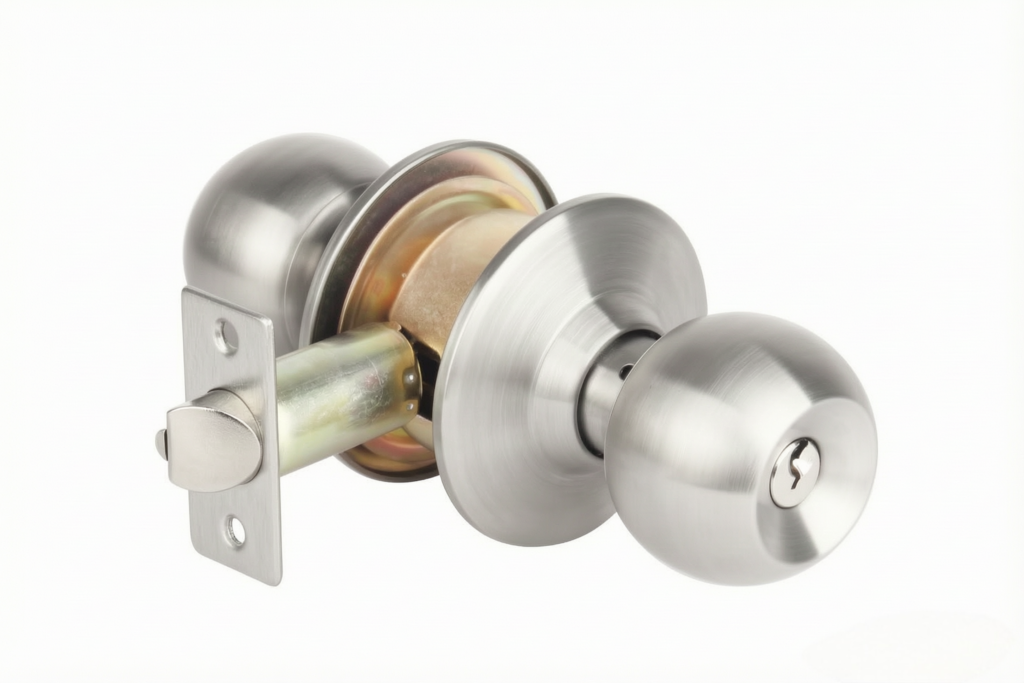
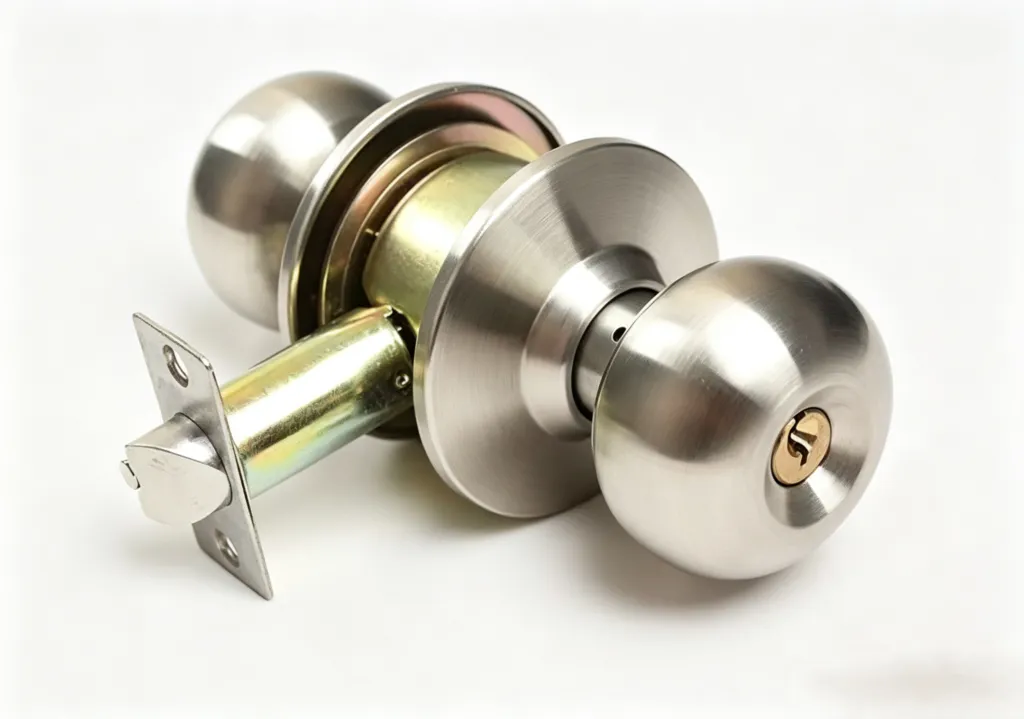
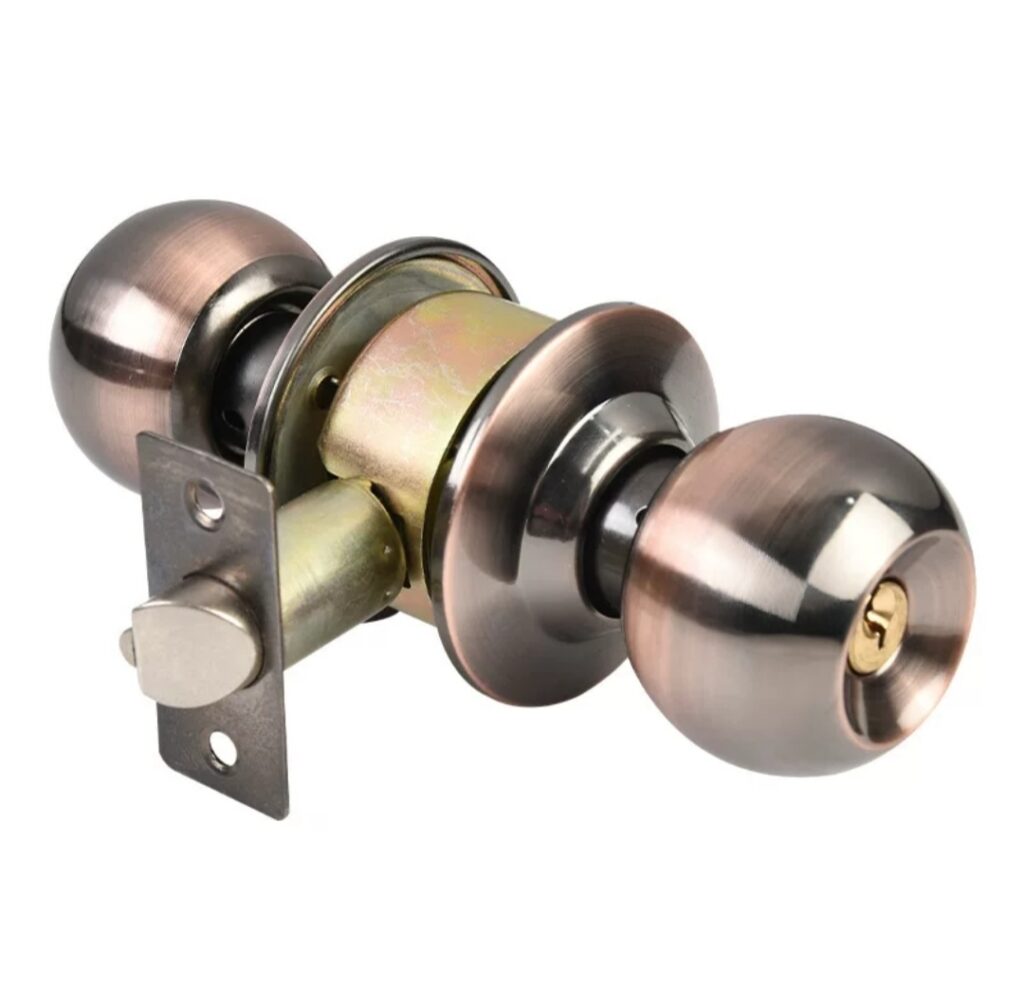
For overseas door hardware buyers, a door lock can look completely suitable in a product photo and still be the wrong choice for the project.
One of the reasons is often overlooked: backset.
A buyer may carefully check the lock material, finish, key type, door thickness and packaging, but forget to confirm whether the backset matches the door preparation and installation requirements.
For small quantities, this can be an inconvenience.
For a bulk order of hundreds or thousands of door locks, it can become a much more expensive problem.
For B2B buyers, distributors, importers and project purchasers, understanding the difference between 60mm and 70mm backset is therefore not just a technical detail. For B2B buyers, this is also part of choosing a reliable door hardware supplier who can clearly confirm product specifications before production.It is part of making sure the product actually fits the application.
What Is Door Lock Backset?
Backset is the distance from the edge of the door to the center of the lock cylinder, knob or spindle, depending on the lock design.
In simple terms, it determines how far the lock mechanism sits from the edge of the door.
The two common measurements found in many mechanical door locks are:
- 60mm backset
- 70mm backset
The difference is only 10mm, but that 10mm can affect the installation position and whether the lock is suitable for the existing door preparation.
This is why backset should be treated as an important door lock specification rather than a minor product detail.
Why 10mm Can Matter in a Bulk Order
A common mistake is to think:
«“The lock is almost the same, so 60mm and 70mm should both work.”»
That assumption can create problems.
If the door has already been prepared for a particular backset, changing to another measurement may alter the position of the lock body and the handle or knob.
For a new construction project, the installation specification may already define the required backset.
For replacement projects, distributors may need to match an existing door preparation.
In both cases, the buyer should confirm the required measurement before placing the order.
A 10mm difference is small when looking at a product drawing, but it is not necessarily small during installation.
60mm Backset vs. 70mm Backset
The basic difference is straightforward:
Specification| 60mm Backset| 70mm Backset
Distance from door edge| 60mm| 70mm
Lock position| Closer to door edge| Further from door edge
Typical consideration| Compact door preparation| Different door preparation requirements
Suitable for| Applications requiring 60mm| Applications requiring 70mm
B2B purchasing priority| Confirm before production| Confirm before production
Neither measurement is automatically “better.”
The correct choice depends on the door, project specification and installation requirements.
This is an important point for overseas buyers because product selection should be based on application compatibility, not simply on which specification sounds more common.
Why Door Thickness and Backset Should Be Checked Together
Backset should not be reviewed in isolation.
Another important specification is door thickness.
For example, a mechanical lock may be designed for a door thickness range such as:
35–50mm
A buyer may find that the lock has the correct 60mm backset but overlook the fact that the project uses doors outside the specified thickness range.
That is why a proper product specification should be reviewed as a complete set:
- Door type
- Door thickness
- Backset
- Lock body dimensions
- Key or cylinder configuration
- Handle or knob type
- Finish
- Installation requirements
Backset is only one part of the specification. The same applies to material selection: the right door lock material should also be matched with the application, environment, usage frequency and project requirements. For a more practical approach to material selection, see our guide to [Door Lock Material for B2B Projects: Why the “Right” Material Can Still Be Wrong].
Clear specification confirmation is also one of the first steps a reliable door lock factory should take before a buyer places a bulk order.
This approach reduces the risk of selecting a lock that looks correct but does not match the actual application.This is one reason why specifications can matter more than a small difference in unit price when purchasing door locks in bulk.
Why Backset Is Especially Important for Distributors
Distributors often purchase door locks for different customers rather than for one single project.
This creates another challenge.
A distributor may have several markets using different door preparation standards. If the distributor purchases only one backset without understanding customer requirements, inventory can become difficult to sell.Backset is only one part of installation compatibility. Buyers should also check door thickness, bore holes, latch and strike arrangement, and other installation details. See our guide on door lock compatibility before a bulk order for seven practical points to check.
For example, imagine a distributor imports a large quantity of locks with a 70mm backset because the price is attractive.
Later, an important customer requests a 60mm version.
The distributor now has two choices:
- Purchase another batch with the required specification.
- Try to sell the existing stock to another market or application.
The problem is no longer simply the price of the lock.
It becomes an inventory management issue.
This is why experienced distributors usually confirm the target market and application before deciding which specifications to stock.
Replacement Projects Require Extra Attention
Backset becomes particularly important when the locks are being used for replacement.
In a new building project, the door manufacturer or contractor may be able to prepare the door according to the selected lock.
In a replacement project, the door may already have:
- Existing holes
- Existing lock pockets
- Existing spindle positions
- Existing strike plate positions
- Existing handle positions
The new lock needs to work with the existing preparation as closely as possible.
If the backset is different, the installer may need to modify the door.
That may mean additional labor, additional tools and additional installation time.
For a B2B buyer supplying hundreds of replacement locks, these additional costs can become significant.
Why Product Drawings Are More Useful Than Product Photos
A product photo is useful for checking:
- Appearance
- Finish
- Handle or knob style
- General construction
But a photo usually cannot tell a buyer whether the lock will fit a particular door.
For technical purchasing, product drawings and specification sheets are much more valuable.
A professional supplier should be able to provide dimensional information such as:
- Backset
- Lock body dimensions
- Faceplate dimensions
- Door thickness range
- Hole spacing where applicable
- Key dimensions or cylinder information
- Installation dimensions
For overseas B2B buyers, having these specifications before ordering samples or bulk quantities can save considerable time.
A Practical Question Buyers Should Ask Suppliers
Instead of simply asking:
“What is the backset?”
A better purchasing question is:
“Please confirm the backset, applicable door thickness, lock body dimensions and installation dimensions for this model.”
This gives the supplier a clearer technical requirement.
It also creates a written specification that can be checked against the buyer’s project requirements before production.
For OEM or customized orders, this becomes even more important.
If the buyer needs a particular backset, door thickness range or installation configuration, those requirements should be confirmed before the order enters production.
Backset Should Be Written Clearly on the Purchase Order
A specification that exists only in a WhatsApp conversation or an informal quotation can easily be misunderstood later.
For bulk purchasing, important dimensions should be clearly written in the quotation, purchase order or approved product specification.
For example:
Item No.: 5871Wood-ET
Suitable Door: Wooden Door
Door Thickness: 35–50mm
Backset: 60mm / 70mm
Material: Wood / Iron Plating
Key: Iron Key / Brass Key
The exact specifications will depend on the product, but the principle is the same:
If a dimension matters to installation, it should appear clearly in the order specification.
This is one of the simplest ways to reduce misunderstandings between overseas buyers and manufacturers.
60mm or 70mm: Which One Should You Choose?
There is no universal answer.
The right backset depends on the actual application.
Choose 60mm when:
- The project specification requires 60mm.
- The existing door preparation is designed for 60mm.
- The customer specifically requests a 60mm configuration.
- The lock is intended to replace an existing 60mm model.
Choose 70mm when:
- The project specification requires 70mm.
- The existing door preparation matches 70mm.
- The customer specifically requests a 70mm configuration.
- The application has been confirmed as compatible with the 70mm lock.
The important point is not to choose based on the assumption that one measurement is universally better.
The correct backset is the one that matches the door and the project.
What Overseas Buyers Should Confirm Before Bulk Ordering
Before approving a bulk order, B2B buyers can use this simple checklist:
- Confirm the door type
Is it for:
- Wooden doors?
- Metal doors?
- Interior doors?
- Exterior doors?
- Residential projects?
- Commercial projects?
- Confirm the door thickness
Do not assume that every standard lock fits every door.
- Confirm the backset
Specify clearly whether the requirement is:
- 60mm
- 70mm
- Or another measurement
4.Confirm installation dimensions
Check the lock body, faceplate, spindle and other relevant dimensions.
- Confirm the key or cylinder configuration
Different markets and applications may require different key systems.
- Confirm the finish
For large orders, the finish should be clearly defined in the specification.
- Approve the sample
The approved sample should be checked against the technical requirements before bulk production.
- Keep the final specification
The approved specification should remain the reference for production and quality inspection.
The Real Cost of a Wrong Backset
The biggest mistake is to look only at the unit price.
Suppose a buyer saves a small amount per lock by choosing a product without fully checking the backset.
If the locks later require modification, replacement or additional installation work, the apparent saving can disappear quickly.
For bulk orders, the real purchasing cost includes much more than the factory price.
It can include:
Product cost + shipping + installation labor + replacement cost + project delay + inventory risk
This is why experienced importers pay attention to technical specifications before they compare quotations.
The cheapest lock is not necessarily the lowest-cost solution.
Final Thoughts for Global Door Hardware Buyers
Backset is one of those small technical details that can easily be overlooked during purchasing.
Yet for door locks, small dimensional differences can have a direct impact on installation compatibility.
Whether a project requires 60mm or 70mm, the important thing is to confirm the requirement before production starts.
For distributors and importers, a reliable sourcing process should therefore go beyond comparing price and appearance.
A better process is:
Application → Door specifications → Backset → Product dimensions → Sample → Approved specification → Bulk production
When these details are confirmed early, both the buyer and manufacturer have a much clearer production reference.
At Shengzhao Hardware, we believe that good door hardware sourcing starts with clear specifications—not just a product photo and a price.
If you are sourcing door locks, tubular locks, lever locks, rim locks or other door hardware for wholesale, distribution or building projects, feel free to contact us with your required specifications.
Contact Shengzhao Hardware
Website: www.shengzhao-hardware.com
WhatsApp / WeChat: +86 131 4475 5830
Email: service@shengzhao-hardware.com