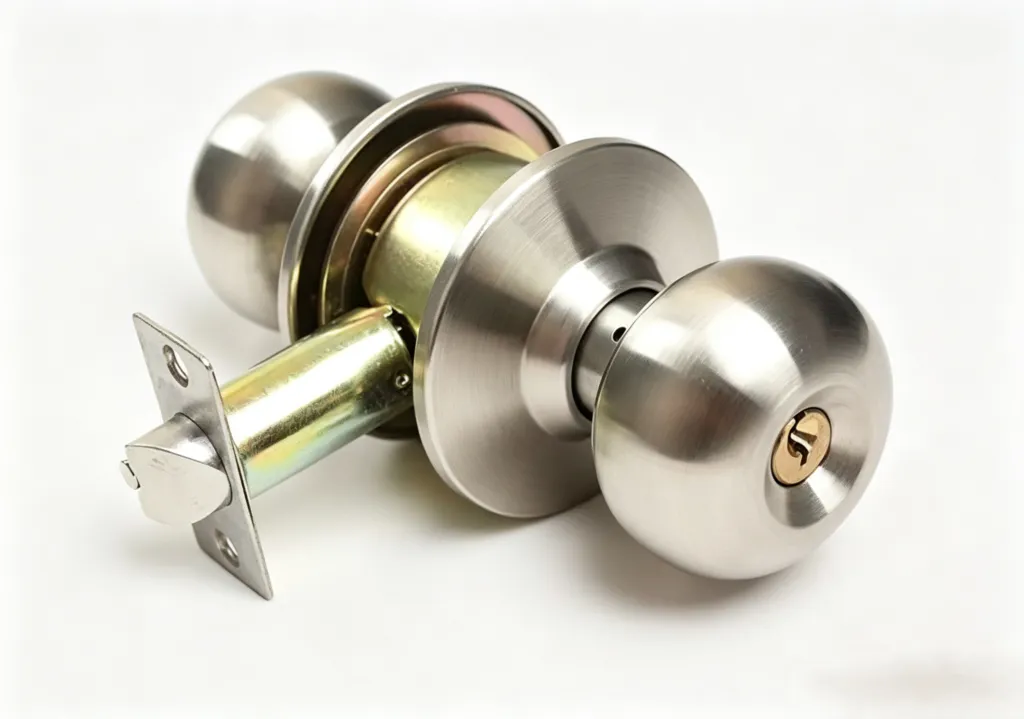
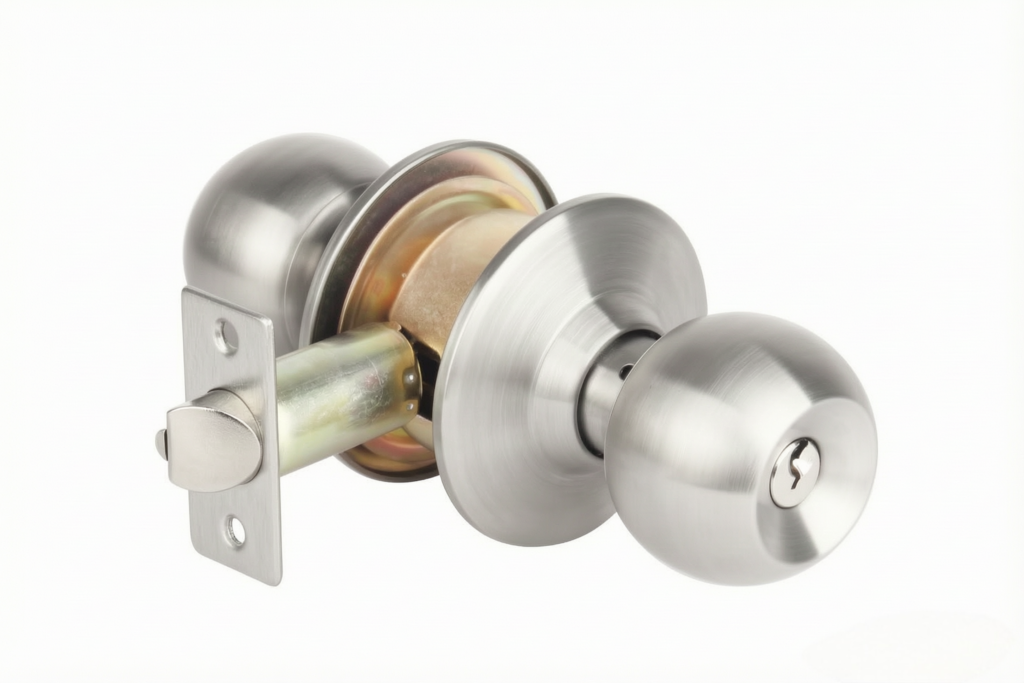
Choosing a door lock supplier is only the beginning of a B2B purchasing relationship.
For an overseas buyer, the more important question often comes after the purchase order is confirmed:
What happens next?
Will the supplier confirm the specifications again?
Will the production details be communicated clearly?
What happens if something needs to be changed before production?
How will the buyer know when the order is ready?
These questions may sound simple, but they can make a big difference when buying door locks or other door hardware in bulk.
A reliable supplier should not disappear after receiving the purchase order. There should be a clear process between order confirmation and shipment.
For overseas distributors, importers, wholesalers, and project buyers, this process can be just as important as the product itself.
- Order Confirmation Should Be More Than a Simple “Received”
A purchase order contains many details.
For a door lock order, these may include:
●Model or SKU
●Product type
●Finish
●Material
●Door thickness
●Backset
●Packaging requirements
●Quantity
●Logo or OEM requirements
●Carton marks
●Shipping instructions
For bulk purchasing, clear door lock specifications are often more important than simply comparing prices.
A good supplier should make sure both sides are working from the same information.
This is especially important when several similar-looking door locks are included in the same order.
For example, two models may look almost identical in a product photo but have different functions, backsets, finishes, or packaging.
A short confirmation before production can prevent a surprisingly expensive mistake later.
The best time to discover a specification problem is before production starts—not after the goods arrive at the buyer’s warehouse.
- Changes Should Be Discussed Before They Become Production Problems
B2B orders are not always perfectly straightforward.
Sometimes a buyer notices a small detail after sending the order.
Perhaps the finish needs to be changed. Maybe the carton label needs another language. The buyer may want a different quantity per inner box, or discover that a project requires a different door thickness range.
These things happen.
What matters is how the supplier responds.
A practical supplier should tell the buyer whether the change is still possible and, more importantly, whether the change will affect:
●Production time
●Cost
●Packaging
●Materials
●Delivery schedule
Not every request can be changed at every stage.
Once production has started, some modifications may no longer be practical.
That is why clear communication early in the order is so valuable.
Buyers should therefore confirm door lock specifications carefully before production starts, because changing them after production has begun can affect components, finishing, assembly, packaging and delivery.
- Production Updates Do Not Need to Be Complicated
Some buyers do not expect a supplier to send daily production reports.
They simply want to know what is happening.
A useful production update can be quite simple:
Order confirmed → materials prepared → production started → assembly → inspection → packing → ready for shipment
The exact process can vary depending on the product and order.
The important point is that the buyer should not have to repeatedly ask:
“How is my order?”
For overseas B2B customers, communication is part of the purchasing experience.When placing another order for the same door lock, buyers should still confirm whether any details have changed since the previous order.
The buyer may be coordinating warehouse space, shipping schedules, sales plans, construction projects, or downstream customers.
A supplier who communicates clearly makes those decisions easier.Good communication after an order is important, but buyers should also evaluate the supplier before making the financial commitment. Before the first bulk order begins, it is useful to understand [what a door lock factory should prove before you pay a bulk order deposit].
- Photos Are Useful, but They Should Answer Questions
Production photos can be helpful, but sending random factory pictures is not the same as providing useful information.
For a bulk door lock order, useful photos may show details such as:
●Product appearance
●Finish consistency
●Lock body and accessories
●Packaging
●Carton labels
●Quantity per carton
●Finished cartons before shipment
For an OEM order, photos can also help confirm customized details before the goods leave the factory.
The purpose of these photos is not simply to show that a factory is busy.
They should help the buyer understand what is actually being prepared for shipment.
That small difference matters.
- Packaging Is Part of the Order, Not an Afterthought
A door lock can leave the factory in good condition and still create problems if the packaging is not suitable for international transportation.
B2B buyers should pay attention to questions such as:
●How many sets are packed in each inner box?
●How many inner boxes are packed in one carton?
●Are carton marks correct?
●Is the product protected against scratches?
●Is the packaging suitable for the expected transportation conditions?
●Does the outer carton match the buyer’s requirements?
Packaging is particularly important for distributors and wholesalers because the product may be handled several times before reaching the final customer.
Good packaging does not necessarily mean expensive packaging.
It means packaging that makes sense for the product, order quantity, transportation method, and buyer’s market.
- A Supplier Should Know When to Ask Questions
One of the signs of a professional supplier is not how many questions they answer.
It is whether they ask the right questions before a mistake happens.
This becomes especially important when a sample looks good but the buyer still needs to make sure the bulk order will meet the same expectations.
For example, if a buyer orders several finishes of the same lock model, the supplier may need to confirm whether the finishes should be packed separately.
If a buyer requests OEM packaging, the supplier may need to confirm the artwork, carton information, label position, and packaging quantity.
If the order is for a building project, the supplier may need to understand whether all doors use the same specification.
These questions can sometimes make the ordering process feel slower.
In reality, they can make the final process much smoother.
Good communication is not about asking more questions. It is about asking useful questions at the right time.
- What Overseas Buyers Should Expect From a Supplier
A professional B2B supplier does not need to promise that every order will be perfect.
Manufacturing is a real process, and unexpected situations can happen.
This is why professional door lock manufacturers need to identify and prevent quality problems before shipment.
What buyers should expect is transparency.
A reasonable supplier should be able to communicate:
1.What has been confirmed.
2.What is being produced.
3.Whether anything has changed.
4.Whether there is a problem that may affect delivery.
5.What has been inspected.
6.How the goods are packed.
7.When the order is ready for shipment.
This is especially important when the buyer and supplier are thousands of kilometres apart.
The buyer cannot simply walk into the factory whenever there is a question.
Communication becomes part of quality control.
- Why This Matters More for Repeat Buyers
For a first order, the buyer is usually evaluating the supplier.
For a repeat order, something more important begins to develop: a working system.
The supplier learns the buyer’s preferred models, finishes, packaging, labels, and communication style.
The buyer also learns how the supplier handles production, inspection, changes, and shipping.
This can make future orders easier.
For distributors importing door locks regularly, a stable supplier relationship can save time because the same basic requirements do not need to be explained from zero every time.
That does not mean buyers should stop checking specifications.
It means the purchasing process becomes more predictable.
- How Shengzhao Hardware Approaches B2B Orders
At Shengzhao Hardware, we understand that an overseas door lock order is not simply a quantity of products on a purchase order.
There is usually a business behind that order.
It may be a distributor preparing stock for the next season.
It may be a wholesaler supplying local hardware stores.
It may be an importer working with a container shipment.
Or it may be a building project that needs a consistent specification across many doors.
Our approach is to communicate the important details before production and keep the buyer informed during the order process.
With more than 16 years of manufacturing experience in door hardware, we have worked with different types of buyers and understand that product specifications, packaging, finish, quantity, and delivery requirements can all affect the final purchasing result.
We do not believe that communication should stop after receiving a purchase order.
For us, the order process continues until the goods are checked, packed, and prepared for shipment.
- A Simple Checklist for Your Next Door Lock Order
Before placing your next bulk order, it is worth checking whether your supplier can clearly answer these questions:
●Are all product models and SKUs confirmed?
●Are finishes clearly specified?
●Are the material and key specifications confirmed?
●Are packaging requirements understood?
●Are OEM details confirmed if applicable?
●Is the production schedule clear?
●Will important production updates be communicated?
●Can changes be discussed before production reaches the relevant stage?
●Will the finished goods and packaging be checked before shipment?
You do not need a complicated purchasing system.
You need a supplier who pays attention to the details that matter to your business.
Conclusion: The Real Test of a Supplier Starts After the Order
A supplier’s website can look professional.
A product catalogue can look impressive.
A quotation can look competitive.
But the real working relationship begins after the purchase order is confirmed.
For overseas B2B buyers, the quality of communication between order confirmation and shipment can tell you a lot about how a supplier actually works.
A good door lock supplier should not only be able to manufacture the product.
They should also be able to communicate clearly, identify potential problems early, and help the buyer keep the order under control.
That is what turns a one-time purchase into a long-term supplier relationship.
Contact Shengzhao Hardware
Looking for a reliable door lock and door hardware supplier in China for your distribution, wholesale, OEM, or building project?
Shengzhao Hardware supplies door locks and door hardware for overseas B2B buyers.
Website: www.shengzhao-hardware.com
WhatsApp / WeChat: +8613144755830
Email: service@shengzhao-hardware.com
If you are preparing a bulk door hardware order, feel free to contact us with your product models, quantities, specifications, and requirements.