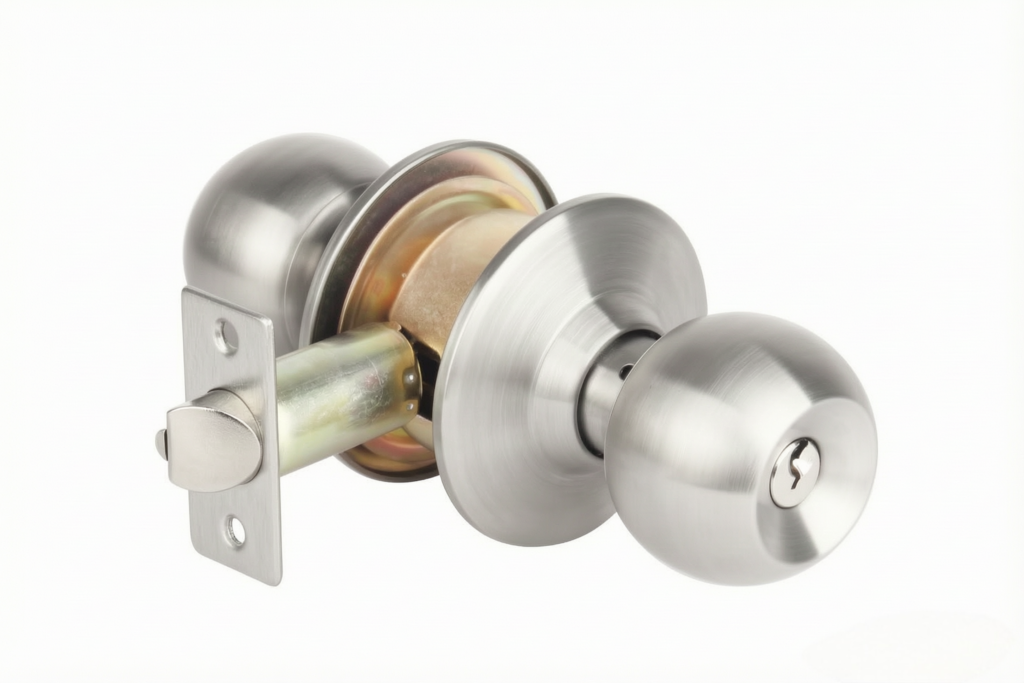
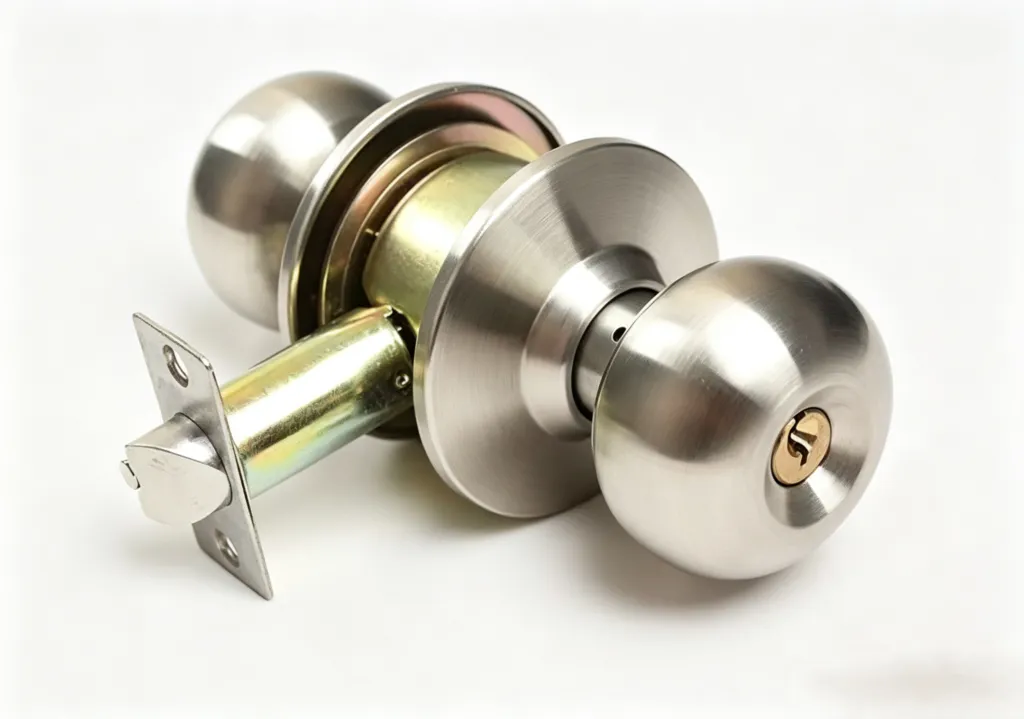
A door lock can look good in a sample photo and still create problems after a bulk order.
For overseas distributors, wholesalers, importers and project buyers, checking the appearance of a door lock is only the first step.
Before approving a bulk order, buyers should also pay attention to how the lock actually works.
This does not always require complicated laboratory equipment.
A practical functional check can help buyers identify problems that may not be obvious from the appearance of the product.
Here are five points worth checking before moving from sample approval to bulk purchasing.
- Check the Lever or Knob Movement
The first thing to check is how the lever or knob feels during operation.
Move it several times and pay attention to whether the movement is:
●Smooth and consistent
●Too loose
●Too tight
●Uneven
●Noisy
●Difficult to return to its original position
A single operation may not show a problem.
For B2B buyers, repeated operation is more useful because a lock may feel acceptable once but behave differently after multiple cycles.
This is especially important when the same model will be purchased in large quantities.
- Check the Latch Operation
The latch is one of the most important working parts of a mechanical door lock.
When operating the lever or knob, the latch should move properly and return correctly.
Buyers can check whether:
●The latch retracts fully
●The latch returns smoothly
●The movement is consistent
●There is unusual resistance
●The latch becomes difficult to operate after repeated use
A lock that looks attractive but has inconsistent latch movement can create installation and usage problems later.
For project orders, this type of issue can become more costly because replacing or repairing locks after installation is much more difficult than identifying the problem before shipment.
Different latch configurations can also affect how a mechanical door lock operates, so B2B buyers should understand the difference between a spring latch and a deadlocking latch before ordering.During sample testing, buyers should also verify strike plate compatibility to ensure that the latch enters the opening smoothly during installation.
- Check the Key Function
For keyed door locks, the key should be checked separately from the exterior appearance.
Insert and remove the key several times.
Then check whether the key turns smoothly and whether the locking and unlocking functions work consistently.
Buyers should pay attention to:
●Key insertion
●Key removal
●Key rotation
●Locking function
●Unlocking function
●Any unusual resistance
If a buyer is sourcing thousands of locks, even a small functional problem can become a practical issue when multiplied across a large quantity.
This is why a sample should be tested as a working product, not only inspected as a finished appearance.For a practical sample-checking method, see our guide: How to Test a Tubular Lever Lock Sample in 60 Seconds Before a Bulk Order.
- Check the Interaction Between the Main Parts
A door lock is not just a collection of individual components.
The lever or knob, latch, spindle, cylinder and other internal parts need to work together correctly.
During a sample check, buyers should operate the lock several times and observe whether the different parts work together smoothly.
For example, a buyer may find that the lever feels normal, but the latch does not retract completely.
Or the key may work correctly when the door is open but become difficult to turn when the lock is installed on the door.
These details are easy to miss if the inspection only focuses on appearance.
For this reason, functional checking should include the actual operating condition whenever possible.
- Check the Lock After Repeated Operation
One of the most useful checks is also one of the simplest: operate the lock repeatedly.
A lock that works once does not automatically mean that it will provide a consistent user experience.
For a sample, buyers can repeat the main functions several times:
1.Operate the lever or knob.
2.Check the latch movement.
3.Lock and unlock with the key if applicable.
4.Repeat the operation.
5.Look for changes in resistance, noise or movement.
The purpose is not to replace professional laboratory testing.
Instead, it is a practical pre-order check that can help buyers identify obvious functional problems before committing to a larger quantity.
Why Functional Checking Matters for B2B Buyers
For retail consumers, one defective lock may be an individual product problem.
For an importer, distributor or project buyer, the situation can be different.
A problem repeated across a bulk order can affect:
●Installation work
●Customer complaints
●Replacement costs
●Project schedules
●Warehouse handling
●Future repeat orders
This is why experienced B2B buyers often look beyond the appearance of a door lock.
The real question is not only:
“Does the sample look good?”
It is also:
“Does the lock operate consistently, and can the same result be expected from the bulk order?”
A practical functional check cannot guarantee that every production unit will be perfect.Buyers should also consider whether the approved sample can be matched consistently during bulk production. For a broader discussion, see our guide: Why Door Lock Consistency Matters More Than a Good First Order.
However, it gives buyers another layer of information before making a larger purchasing decision.
A Practical Approach Before Bulk Purchasing
Before approving a bulk door lock order, buyers can combine several basic checks:
Appearance → Specifications → Installation fit → Function → Repeated operation → Final sample approval
Clear specifications are also important before production starts. For more information, see our guide: Why Door Lock Specifications Matter More Than Price in Bulk Purchasing.
This approach helps separate a visually acceptable sample from a sample that has also been checked as a working product.
For overseas B2B buyers, that difference can be important.
A good-looking door lock may attract attention.
A consistently functioning door lock is what ultimately needs to work in the customer’s hands.
If you are sourcing mechanical door locks or door hardware for distribution, wholesale or building projects, you can contact Shengzhao Hardware to discuss your required models, specifications and order quantities.
Contact Shengzhao Hardware
Website: www.shengzhao-hardware.com
WhatsApp / WeChat: +8613144755830
Email: service@shengzhao-hardware.com